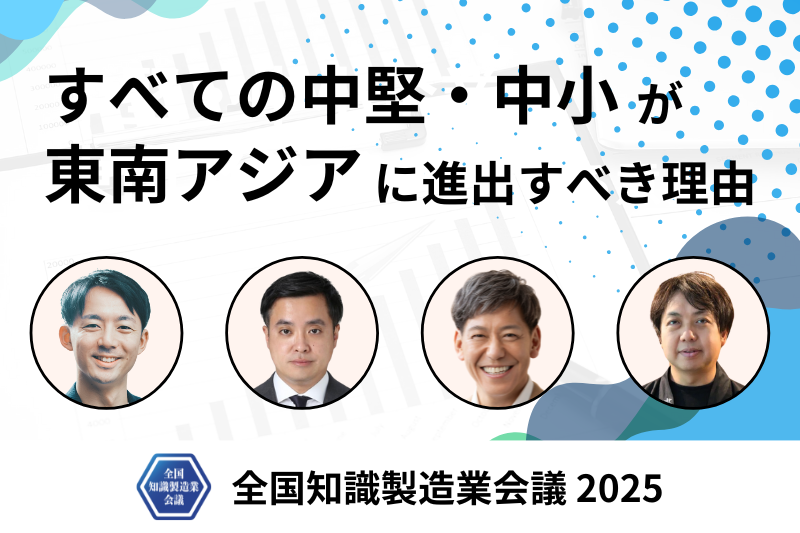
- Speech/Session Reports
New era of small and medium-sized companies and ventures will change Japan and the world [National Knowledge Manufacturing Conference 2025 Session Digest].
2026.03.02![New Era of Small and Mid-Sized Companies and Ventures Will Change Japan and the World [National Knowledge Manufacturing Conference 2025 Session Digest].](https://km.lne.st/wp-content/uploads/sites/81/2025/03/openingsession2-1024x682.png)
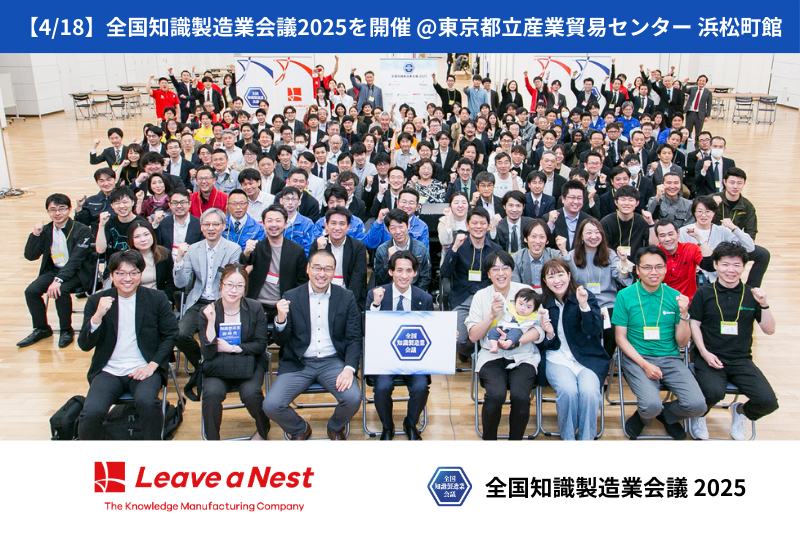
Leave a Nest held the National Knowledge Manufacturing Conference 2025 on April 18, 2025, as a venue for combining the knowledge and technology of small and medium-sized companies and ventures to solve social issues.
The opening session, "Small and medium-sized companies and ventures in the new era will change Japan and the world" (session partner: Pioneer Corporation), began with a presentation by Mr. Yamano of General Incorporated Association Venture-type Business Succession and Mr. Nagata of UntroD Capital Japan Co. The session began with a presentation by Mr. Yamano and Mr. Nagata of UntroD Capital Japan, followed by a panel discussion joined by Mr. Adachi of Mizuho Bank, Ltd. and Mr. Maru of Livanes Corporation. Under the theme of "Co-creation of new knowledge that will change the world," the panelists discussed the overseas expansion of small and medium-sized enterprises and venture businesses, as well as cooperation between the two.
This article provides a digest of the event.
Session Speakers
Ms. Chie Yamano (Representative Director, Venture-type Business Succession, General Incorporated Association)
Mr. Akihiko Nagata (President, UntroD Capital Japan K.K.)
Mr. Tatsuo Adachi (Managing Executive Officer, Co-Head of Retail & Corporate Banking Division, Mizuho Bank, Ltd.)
Yukihiro Maru (Representative Director and Group CEO, Liverness Corporation)
Atotsugi" is what creates the future [Chie Yamano's Lecture Part 1
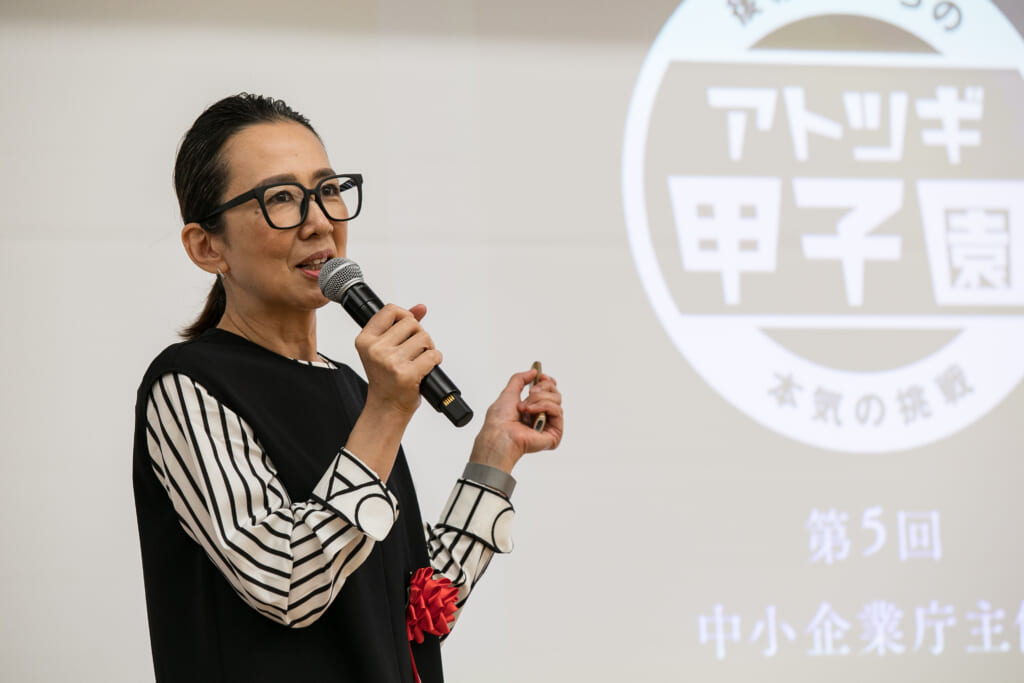
Chie Yamano Representative Director, Venture-type Business Succession General Incorporated Association
Born in 1969. After graduating from Kwansei Gakuin University, worked for a venture company and a consulting firm before joining the Osaka Industrial Innovation Center, a support base for startups and small and medium-sized businesses, as a founding member. While engaged in covering many business executives as editor-in-chief of a business information magazine, he focused on innovation by successors of small- and medium-sized enterprises. In 2018, he established a general incorporated association, Venture-type Business Succession, which aims to create an environment for successors to take on the challenge of developing new businesses, with the mission of "making Atotsugi Venture a part of Japan's culture. He is a part-time lecturer at the Graduate School of Management Strategy, Kwansei Gakuin University and Kansai University. Author of "Atotsugi Venture Thinking - 55 Things to Do Before Becoming President" (Nikkei BP) and "Dramatic Rebuilding - Irrational Decisions Save the Company" (Shinchosha).
The General Incorporated Association for Venture-Based Business Succession (hereinafter referred to as "Venture-Based Business Succession"), of which I am the president, is an organization that supports business successors who are venturing into new areas.
We are working to create a new culture in Japan by defining "atotsugi" as managers who are committed to the survival of their companies by taking on new businesses and areas based on the tangible and intangible management resources they have inherited from their predecessors.
In recent years, the government has adopted a policy of supporting startups and working to create unicorn companies and ecosystems. Financial institutions and VCs have joined this movement, but few institutions have turned their attention to prospective successors of SMEs.
That is why we have been expanding the circle of atotsugi support throughout Japan. Our policy recommendations and activities have gradually borne fruit, and in Kyushu in particular, local governments are supporting Atotsugi in almost all areas. In recent years, local banks, credit unions, and railroad companies have also joined us in providing support. As part of its support, the Small and Medium Enterprise Agency also holds an annual "Atotsugi Koshien," a pitch event in which those who plan to take over a business and are 39 years old or younger can compete.
I believe that there are five major points that make Atotsugi a good candidate for knowledge manufacturing.
The first is the ability to conduct long term trials. At Atotsugi, we are able to develop technology from a medium- to long-term perspective and nurture the seeds of our business across generations.
Second, "a two-top management system is possible. At Atotsugi, existing businesses are left to the predecessors and I can concentrate on new business development. This division of roles makes it easier to optimize resources.
Third, we have a demonstration field. Since we already have the facilities and human resources, we have an environment where trial and error can be conducted.
The fourth is "accumulated know-how. For example, there is a case in which a long-established company that has been involved in Nishijin-ori obi weaving is using its weaving know-how to create conductive fibers and develop wearable devices. Accumulated technology and craftsmanship can be the seed of a new business, can't they?
Finally, the fifth is "commitment to business survival. The companies that I have been involved with are taking on challenges in new areas with the strong belief that they cannot survive without innovating their business.
I would like to create a mechanism to match business successors with researchers and companies in order to create more atotsugi ventures that solve social issues. I hope to find hints for this through discussions with you all today.
Rural areas are the epicenter of startups that will change the world [Lecture Part 2] by Akihiko Nagata
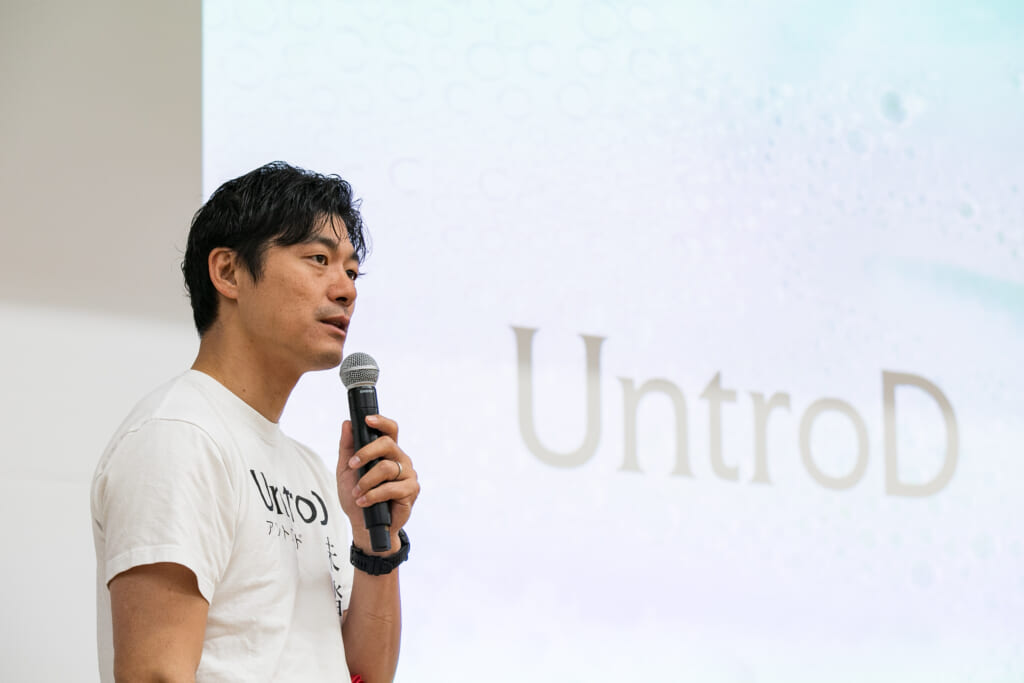
Akihiko Nagata President, UntroD Capital Japan
He has been a director of Euglena Co. since the company was unlisted, with primary responsibility for business strategy, finance, and the biofuels area. 2021 he was appointed CEO of the company, with responsibility for all business execution. 2024 he retired from the company. 2015 he established a real tech fund to promote deep tech investments that help solve social issues. 2024 he was appointed President of UntroD Capital Japan, which manages the fund. In 2024, he was appointed President and CEO of UntroD Capital Japan, which manages the fund. He is focused on realizing social impact in capitalism, including founding and managing Rainwind Sun, which was the first NPO-based social impact IPO in Japan, and serving as a business advisor to Herald Bonnie.
I run an investment fund specializing in deep tech called UntroD Capital Japan. In order to support technologies and researchers who are changing the world by solving social issues, we launched the Real Tech Fund, which specializes in supporting deep tech. Over the past 10 years, we have invested over 40 billion yen in 85 companies in Japan and 16 companies overseas.
Currently, more than half of our investments are in startups originating from rural areas. Why have so many of the investments been made in rural areas? It has something to do with the fact that about 75% of the Grant-in-Aid for Scientific Research is invested in rural areas: all 47 prefectures are home to national universities, and many of the facilities of national research institutes, such as the National Institute of Agrobiological Science, the National Institute of Advanced Industrial Science and Technology, and JAXA, are also located in rural areas. These research institutions have a concentration of research and technology to solve problems specific to their region, and this is the driving force behind the creation of deep-tech startups.
The Real Tech Fund has built a platform to provide support at each stage, starting from R&D "research," proof-of-concept of basic technology, implementation and expansion of mass production measures, and IPO. We have built a platform to provide support at each stage.
Recently, a materials startup called U-MAP, which originated at Nagoya University, and a listed Chiba company called Okamoto Glass have teamed up to bring new materials to the global market. This kind of collaboration between a local startup and a blue-chip local company is already beginning to bear fruit.
Euglena Co., Ltd. of which I served as CEO until 2023, is also a symbolic example of a "startup x local blue-chip company. Euglena was founded in 2005 and was funded by a major trading company in 2008. Although media coverage tends to focus on partnerships with large corporations, in fact, the majority of Euglena's sales from its founding to the present have come from collaborations with countless companies in local regions.
We believe that deep technology is the industry that can earn foreign currency from the rest of the world in our country, which has a shrinking population, no natural resources, and is not an English-speaking country. Based on this belief, we have gradually increased the number of companies from the 85 domestic companies we have invested in that have gone on to achieve major IPOs.
Together with the people gathered here, I hope to create businesses that will expand globally and create jobs and industries in Japan. I look forward to working with you today.
Multiplication" of small and medium-sized companies and ventures will change the world [Talk Session].
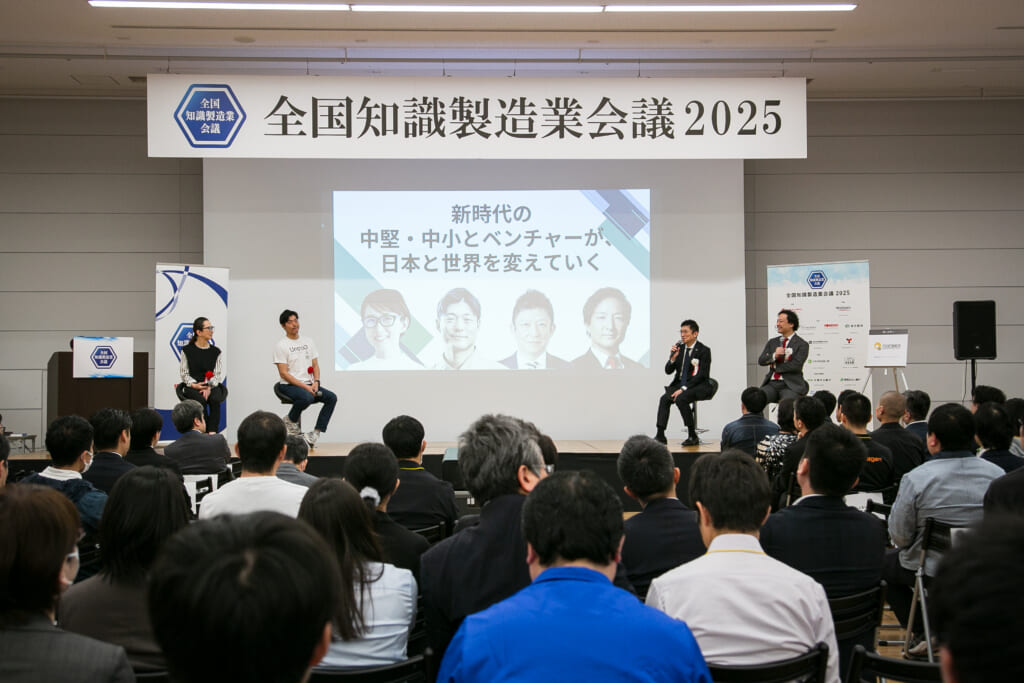
Maru:From here, Mr. Adachi from Mizuho Bank and Maru from Rivanes will join us for a four-person talk session. Could you tell us your impressions of their presentations, Mr. Adachi?
Adachi: I learned a lot from Mr. Yamano's and Ms. Nagata's stories, both of which are examples of "start small and grow big. I learned about Atotsugi for the first time today, and it is very interesting.
Yamano: Thank you very much. Since this is a valuable opportunity, I would like to ask you, Mr. Adachi, what should be done to make it easier for small and midsize companies to raise funds when they take on challenges in new areas? I have seen a number of atotsugi ventures that have grown from a scale of 10 people to 100 people in a short period of time. If we consider this as an extension of our venture support, I believe that small and midsize companies that are challenging new areas can also be included in our investment targets.
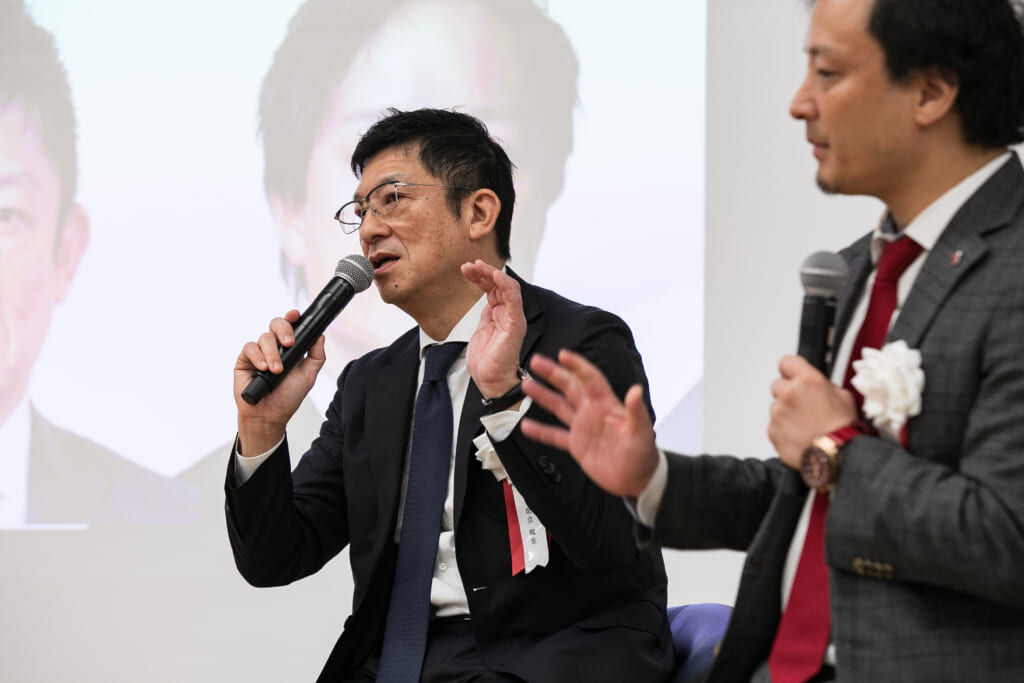
Tatsuo Adachi Managing Executive Officer, Co-Head of Retail & Corporate Banking Division Mizuho Bank, Ltd.
Graduated from Aoyama Gakuin University in 1990 with a degree in Business Administration. Deputy General Manager of Uchisaiwaicho Sales Department 7, Deputy General Manager of Sales Department 4, Senior Deputy General Manager of Sales Department 4, Counselor of Industrial Research Department, Chief Relationship Manager of Sales Department 8, Chief Relationship Manager of Sales Department 8, Chief Relationship Manager of Sales Department 2, Shibuya Branch, Shibuya Branch, Mizuho Bank, Ltd. General Manager of Sales Department VIII, General Manager of Sales Department VIII, Executive Officer of Sales Department Branch, Executive Officer of Sales Department Branch, Executive Officer of Sales Department and Area Manager of Sales Department, Executive Officer of Sales Department and Area Manager (Corporate Area 1) of Sales Department, Executive Officer of Sales Department and Area Manager (Corporate Area 1) of Sales Department, and Group Executive Officer, Deputy President of Retail & Business Corporate Company and current position, Mizuho Financial Group, Inc. from April 2025. Managing Executive Officer, Co-Head of Retail & Business Corporations Company, Mizuho Financial Group, Inc.
Adachi: I think the hurdles to fundraising can be lowered if small and midsize companies and ventures work together to launch new projects. Ventures can procure funds in various ways, such as investment from VC/CVC.
A field with little competition is also an area in which funding is easy to obtain. Products that are near-unreplaceable and one-of-a-kind are likely to generate significant demand and are easy targets for investment. In summary, small and midsize companies and ventures should work together to create new technologies and build technological barriers to entry. This would be an effective choice from a finance perspective.
How should small and midsize companies and ventures expand overseas?
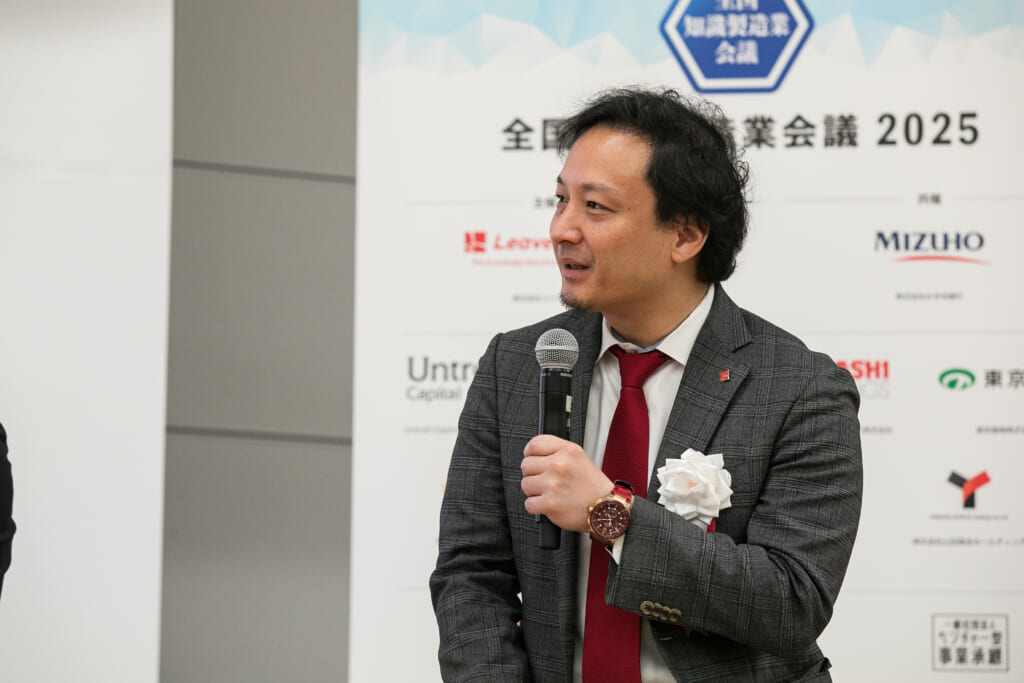
Yukihiro Maru Representative Director, Group CEO, Liverness Inc.
D. from the Graduate School of Agricultural and Life Sciences at the University of Tokyo. 2002, while still a graduate student, he founded LIBANES with only undergraduate and graduate students of science and engineering. He has developed Japan's first "delivery laboratory class of cutting-edge science" into a business. He runs a "knowledge manufacturing business" that creates new businesses by combining technologies and knowledge from different fields, and is the driving force behind one of Asia's largest deep tech venture ecosystems, Tech Planter. He works to solve global issues by discovering deep issues around the world. His major publications include "Deep Tech: The 'Sleeping Technology' That Will Pioneer the Future of the World" (Nikkei BP) and "The New Era of Knowledge Manufacturing" (Liberace Publishing).
Maru: Let's move on to the next topic. The title of this session includes the phrase "changing the world. From here, let's discuss global themes.
The declining birthrate and aging population in Japan are inevitable. When we talk to small and medium-sized enterprises, we find that they are having trouble recruiting human resources. They are concerned that they may not be able to maintain their existing businesses, let alone take on new challenges. One way to solve this problem is to hire overseas personnel. I would like to ask you, Mr. Yamano, to what extent are atotsugis aware of overseas personnel?
Yamano: Atotsugi's 20-30 year olds clearly have overseas expansion in their sights in terms of business. However, I have not heard much about hiring overseas personnel.
Maru:Small and medium-sized enterprises often do not have English websites. For example, just creating an English website would probably increase the number of inquiries for recruitment and business meetings.
Yamano: You are right. I believe that many companies have the potential to grow with just a few opportunities.
Maru:What are your thoughts on business development and hiring overseas personnel, Mr. Nagata?
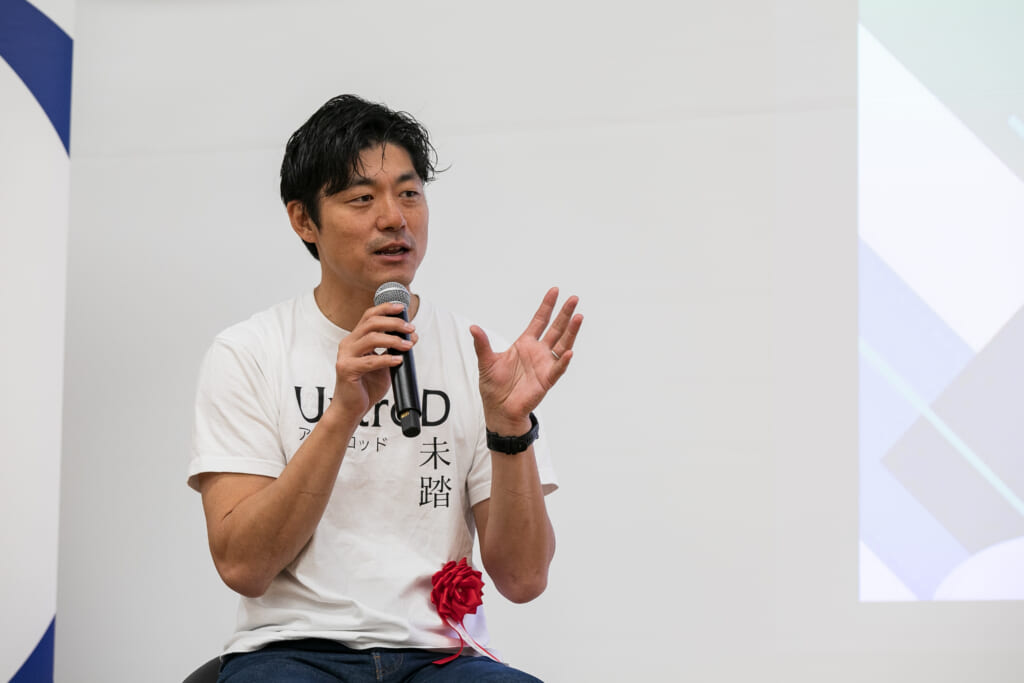
Nagata: I believe that deep tech startups should actively expand overseas. The biggest advantage of deep tech is that it can solve problems common to the world. Japan's GDP is less than 10% of the world's total, but if we expand globally, the market will expand more than 10 times, and the number of potential employers will increase quickly.
Especially in Southeast Asia, the "Japanese brand" is still very popular. I believe that one of the ways to win is to acquire human resources and develop business in a wide area centering on ASEAN.
In fact, we are seeing an increase in the number of foreign researchers at our investee companies. Sometimes foreign students from abroad settle in Japan as they are.
Yamano: How should small and medium-sized enterprises (SMEs) go global?
Maru:There are many possible means, but I think one way to make inroads is to team up with overseas ventures.
For example, at Liverness, we have a bird's eye view of the deep tech domain in Southeast Asian countries to understand local issues and trends, and to create new businesses," he said.Deep Tech TourThe "Mere Old Man" is holding a "Mere Old Man" event.
The tours are open to new business managers from large corporations, small and medium-sized companies, and venture companies, and participants are invited to interact with local deep-tech ventures, government officials, and research institutions that are tackling social issues. In the process, the participants will realize that their technology and knowledge could be useful. Some companies realized that their technology and knowledge could be useful and created new projects in collaboration with the local community.
Adachi: Japan's working population will clearly decrease in the future due to the declining birthrate and aging population. In order to maintain and improve corporate sustainability, we need to look not only to Japan but also to other countries and collaborate with them or change the field. It may be a good idea to develop the conference into an "Asian" knowledge manufacturing conference instead of a "national" conference, for example, by connecting the National Knowledge Manufacturing Conference with Southeast Asia in real time.
To get to know them in a real and exciting way and to work hand in hand with them.
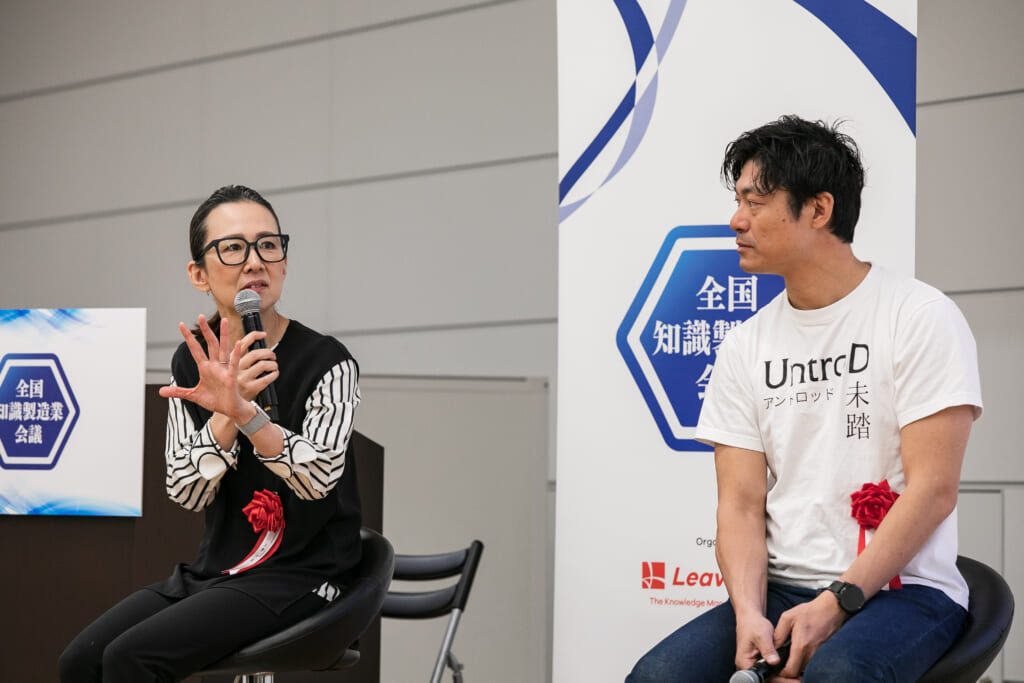
Maru:Finally, I would like to ask each of the speakers to send a word of encouragement to the audience. Please start with Mr. Yamano.
Yamano: This is a place where companies and corporate knowledge are combined to create knowledge manufacturing, but let's not set a goal too early on and instead focus on the excitement of "just wanting to do something interesting. People naturally gather around those who speak with enthusiasm, saying, "I want to realize this kind of future. I hope that you will actively ask, "Can we do something like this?" and look for others who will agree with you.
Nagata: I would like to follow up on Mr. Yamano's encouragement and tell him, "Please be serious about the future you want to realize. I myself have always had a sense of urgency during my years of running Euglena. Startups are serious. There is an intense seriousness to accomplish something within a limited period of time.
That said, the startup side will want to partner with someone who is serious. When I look for partners, I have always been very concerned about whether they have serious eyes and an equal sense of urgency. Someone's heat will always change the world. I hope that today will be a place where heat and heat can interact with each other.
Adachi: At Mizuho Bank, we are committed to "Together we will take on challenges, together we will bear fruit. Together, we will bear fruit. I also believe that the time has come for us to abandon the idea of doing business on a standard-along basis. I also believe that the time has come for us to abandon the idea of doing business on a standard-alone basis. We are entering an era in which we must transcend organizational frameworks and form strong alliances to do business.
We also have a director from Mizuho in charge of venture support here today, as well as staff from the Regional Development Desk, which provides full support for regional revitalization, so let's definitely exchange information and collaborate.
Maru:Finally, I would like to start with me. First of all, everyone, those of you meeting in the hall today.and face it proactively.With many peopleYou will probably exchange business cards, so ask about the skills and knowledge he/she has and the problems he/she wants to solve. The starting point for knowledge manufacturing is "knowledge. In other words, knowing the person in front of you is the start of everything. Let's combine the knowledge and expertise that each of us possesses to create a knowledge manufacturing business that will change the world.
![National Knowledge Manufacturing Conference 2025 4/18] Mizuho Bank, a co-sponsor of the conference, will speak at the opening session, "Medium, Small and Venture Businesses in the New Era Will Change Japan and the World.](https://km.lne.st/wp-content/uploads/sites/81/2025/04/mizuho-1024x682.png)