
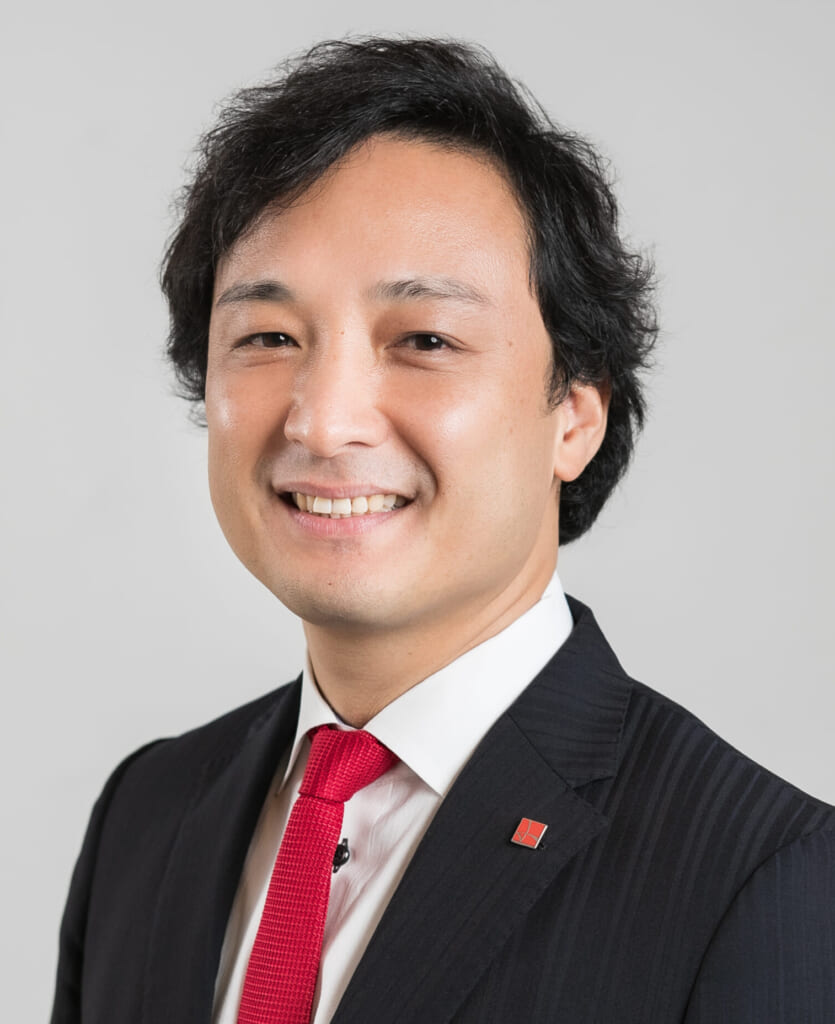
Leave a Nest Co., Ltd.,
Yukihiro Maru, Representative Director and Group CEO
The name “Ribane” comes from the English phrase “Leave a Nest,” which means “to fly the nest.” Ever since our founding in 2002, we have been unearthing the knowledge lying dormant within universities and helping it take flight into society. In other words, we have supported numerous university-based research and development ventures.
The first company in this series is euglena Co., Ltd. What makes euglena so fascinating is its growth process. By incorporating diverse knowledge from academia and partnering with local small and medium-sized enterprises, large corporations, and financial institutions, Euglena Co., Ltd. was listed on the Tokyo Stock Exchange Mothers Market in 2012 and, in 2014, became the first university-spun-off venture in Japan to be listed on the Tokyo Stock Exchange First Section (now the Prime Market).
It is not just university knowledge that remains untapped in Japan. Mid-sized and small businesses—which have long been the backbone of Japan’s economy—have also, in a sense, been overshadowed by the “subcontracting” structure. It was Mr. Shojiro Kobashi of KOBASHI HOLDINGS Co., Ltd., an agricultural machinery manufacturer in Okayama, who made me realize just how important these companies are.
He said to me, “Why not tap into the untapped potential of small and medium-sized enterprises in the region? Why don’t we work together to create a system that connects small and medium-sized enterprises with startups?” He’s absolutely right. What Japan lacks right now is a system that changes the world by connecting mid-sized and small and medium-sized enterprises with startups. That’s what I learned from Mr. Kobashi.
The concept for the National Knowledge-Based Manufacturing Conference began several years ago, and with the support of a powerful partner—Mizuho Bank, Ltd.—we have now reached this historic first event. Now, everyone, let’s combine our knowledge and assets to create new knowledge. Let’s use that knowledge to solve the world’s challenges. And let’s share a common vision of the kind of world we want to build. I am confident that from this gathering, a wealth of new knowledge capable of changing the world will emerge.
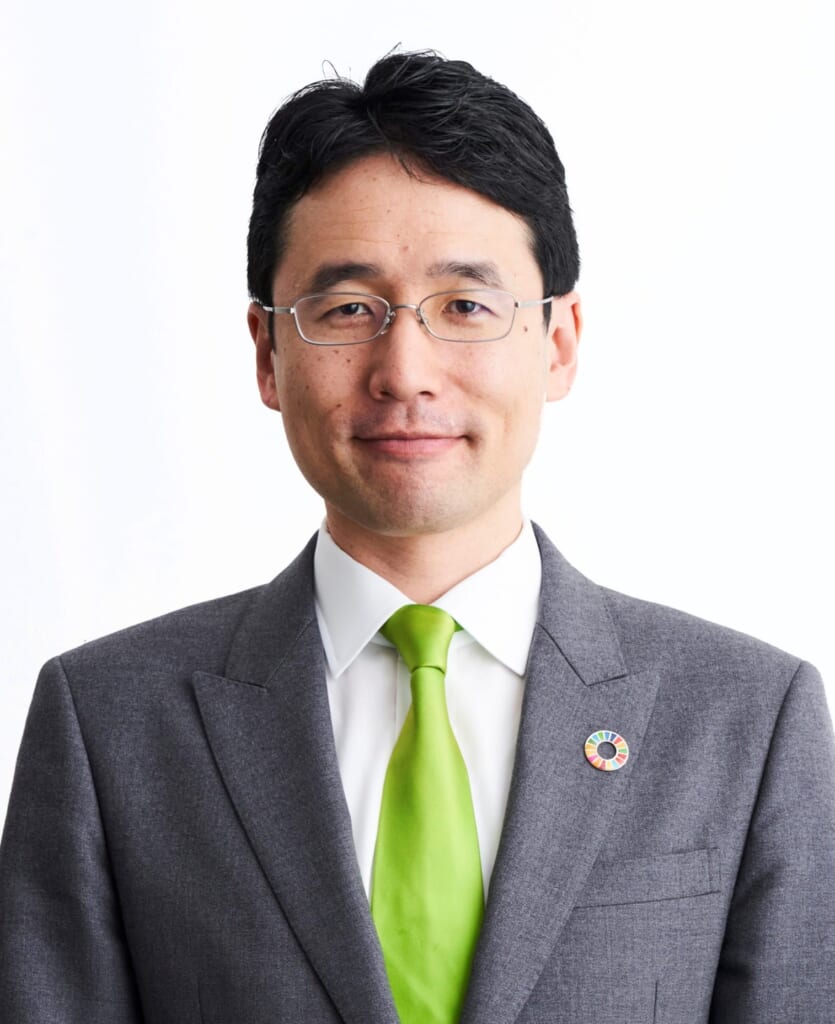
Mr. Mitsuru Izumo, President and CEO of Euglena Co., Ltd.
Euglena Co., Ltd. is a company that began with a personal aspiration of mine. It all started when I traveled to Bangladesh during the summer of my freshman year in college and saw local children suffering from malnutrition. I made a firm resolution in my heart: “I want to help them get healthy” and “I want to bring nutrient-rich food here.”
To break through this impasse, we focused on the large-scale outdoor cultivation of “Euglena (Japanese name: Midorimushi),” a microalgae containing a staggering 59 different nutrients. However, at the time, we were still a university-spinoff startup that had only just gotten off the ground. Although we had research results, we lacked a demonstration site for large-scale cultivation. It was Yaeyama Shokusan Co., Ltd., a major chlorella manufacturer based on Ishigaki Island in Okinawa Prefecture, that reached out to us.
By combining the technology and expertise cultivated over many years by a leading local company with our own knowledge, we successfully achieved the world’s first large-scale outdoor cultivation of Euglena for food on December 16, 2005. Nine years later, on December 3, 2014, euglena Co., Ltd. became the first startup spun off from the University of Tokyo to be listed on the First Section of the Tokyo Stock Exchange (now the Prime Market). Today, we are able to distribute cookies containing euglena to approximately 10,000 children every day at elementary schools in Bangladesh.
The challenges facing today’s society are all complex. If they could be solved using existing methods, someone would have solved them long ago. To tackle these challenges, we absolutely need a “knowledge-based industry” that combines knowledge from different fields.
Startups are the catalyst for this. And it is mid-sized and small businesses that can support startups with their technology and expertise. Isn’t the path Japan should take for these two groups to join forces and work together to drive innovation? As a founding member of the National Knowledge-Based Manufacturing Initiative, we at euglena will continue to devote our full efforts to solving challenges, striving to serve as a model for startups across Japan.
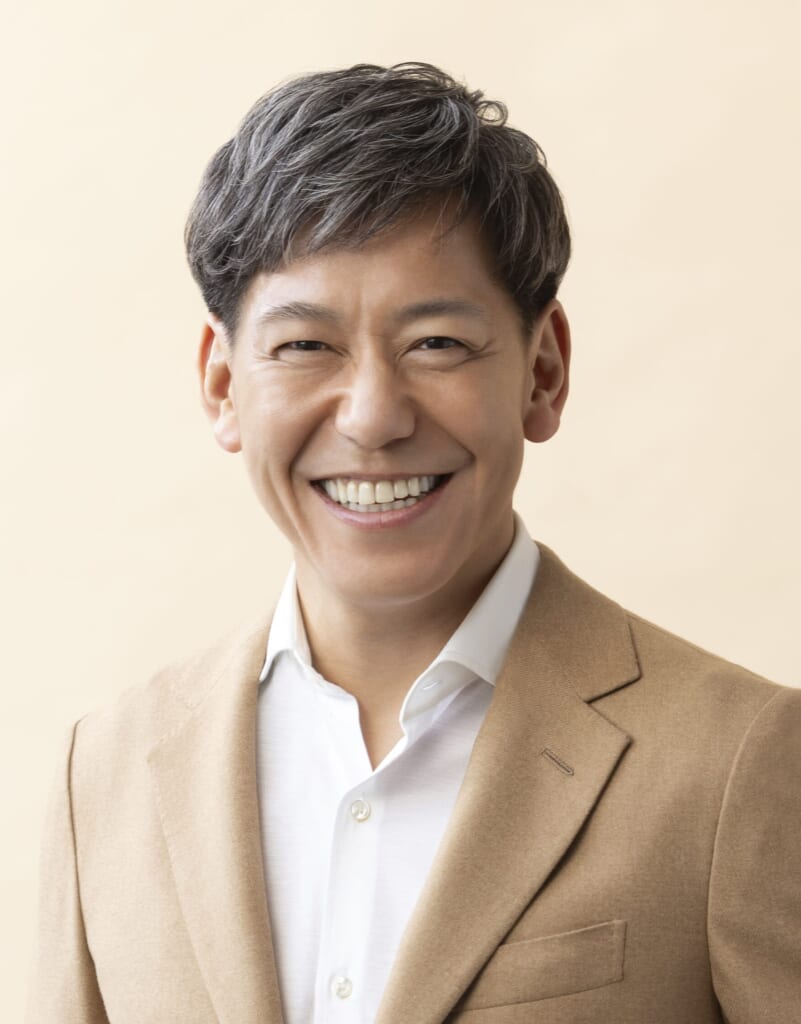
KOBASHI HOLDINGS Co.
Mr. Shojiro Kobashi, President and CEO
We are an agricultural machinery manufacturer founded in Okayama Prefecture in 1910. With a history spanning more than 100 years, we have fortunately continued to grow over the years; however, at the same time, I felt a strong sense of crisis, wondering, “If things continue this way, will we be able to pass the business on to the next generation?” This is because the decline of domestic agriculture shows no signs of slowing down.
While exploring new business opportunities for our company, I met Mitsuru Izumo, the CEO of Euglena Co., Ltd., more than 10 years ago. At the time, Euglena was not yet publicly traded, but Mr. Izumo was forging ahead with overwhelming passion to realize his dream of “saving the world with Euglena.” Meanwhile, although KOBASHI possessed assets passed down through generations, the company had not been taking on any innovative challenges. I still clearly remember how that realization spurred me to action.
A few years later, I met Yukihiro Maru, the CEO of Ribance Co., Ltd. At the time, Ribance was beginning to achieve significant results through a new initiative called “Tech Planter,” which connected startups with large corporations. That was truly wonderful. At the same time, however, I felt deeply frustrated that medium-sized and small businesses in regional areas were not part of that network, and I couldn’t help but say the following to Mr. Maru:
“99.7% of Japanese companies are small and medium-sized enterprises. It is precisely these SMEs that need innovation, and they should be a good fit for startups. If we don’t do this, won’t Japan never improve?” Mr. Maru took my words to heart and immediately launched a regional version of Tech Planter.
The National Conference on Knowledge-Based Manufacturing was established as a result of these developments. It did not come about overnight. It is a movement that emerged as various stakeholders launched new initiatives in their respective fields. We want to work together to revitalize Japan without letting any of these individual aspirations fade away. I believe the National Conference on Knowledge-Based Manufacturing serves as a forum for that very purpose.
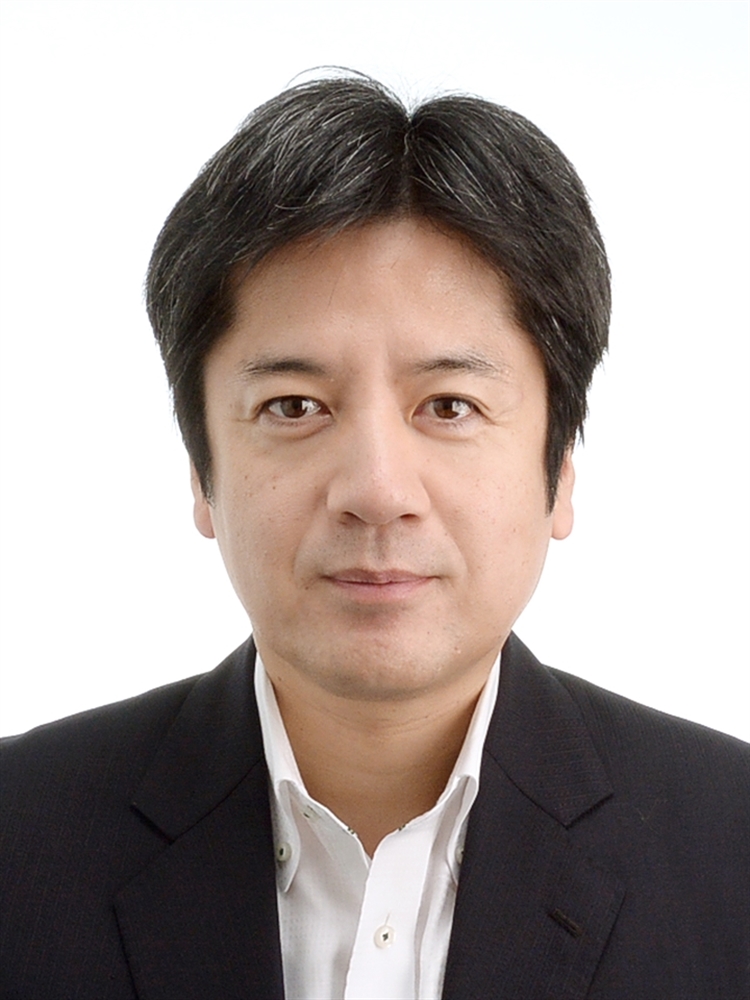
Mizuho Bank, Ltd.
Mr. Masato Kaneda, Executive Officer and Deputy Head of the Retail and Corporate Business Division
We want to revitalize Japan once again. We want to make Japan strong once again. Mizuho Bank is driven by this strong conviction. So, who will lead Japan’s revival? It is the mid-sized and small businesses across Japan that possess cutting-edge technologies. And it is the deep-tech startups that are creating new technologies and driving their implementation in society as viable businesses. We are committed to supporting these organizations with all our might.
Mizuho Bank has three major assets that enable it to do this. First, it has been supporting the growth of startups from an early stage and holds a leading position in Japan in this area. Second, it is the only megabank with a presence in all 47 prefectures. Third, it has a proven track record of supporting the global expansion of Japanese companies and others, while also having built a strong network with major local corporations in Southeast Asia. By combining and leveraging these strengths, Mizuho Bank aims to support the growth of both mid-sized and small businesses across Japan and deep-tech startups, with the goal of fostering the emergence of global companies from Japan.
However, this is not something we can achieve on our own. It is difficult for us to keep up on our own with the research and development that forms the foundation of deep-tech startups’ technologies. Furthermore, in the manufacturing sector—where medium-sized and small businesses play an active role—it is not realistic for us to lead the development of new supply chains and value chains on our own.
In other words, to maximize the value of Mizuho Bank’s assets, we need partners with whom we can build the future together. This is precisely why Mizuho Bank decided to join the founding members of the National Knowledge Manufacturing Conference and co-host its historic inaugural event with Lifeness. By throwing ourselves into the knowledge-based manufacturing sector, we too hope to make Japan stronger and more vibrant. That is our sincere wish.