- Interviews/Specific Examples
Yamada Shokai Holding, a gas construction company that has been in business for 120 years, has a vision that looks beyond venturing out.
2026.03.02
Yamada Shokai Holding, a company that has been involved in gas construction in the Tokai area for 120 years, will be speaking at the National Knowledge Manufacturing Conference 2025 in a keynote session entitled "The Significance of Medium and Small Businesses Investing in Southeast Asia. With a desire to create a business with unique products and ways of proposing them, the company has formed a partnership with REVANES and is expanding its business into Southeast Asia as it promotes collaboration with venture companies. We asked Toyohisa Yamada, representative director of the company, what were the thoughts and aims behind this move.
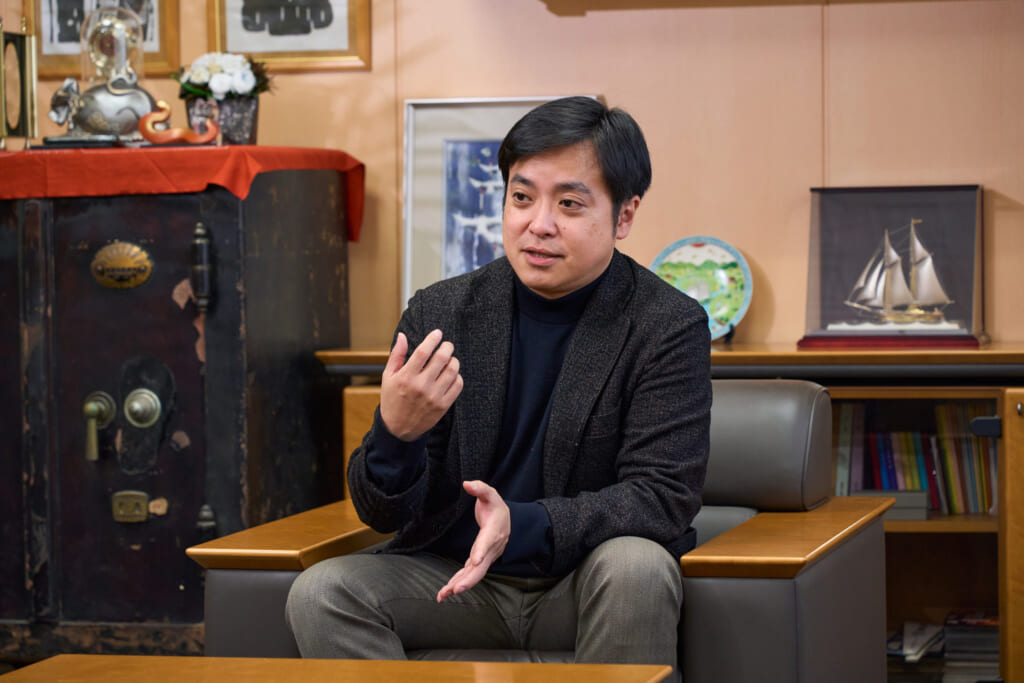
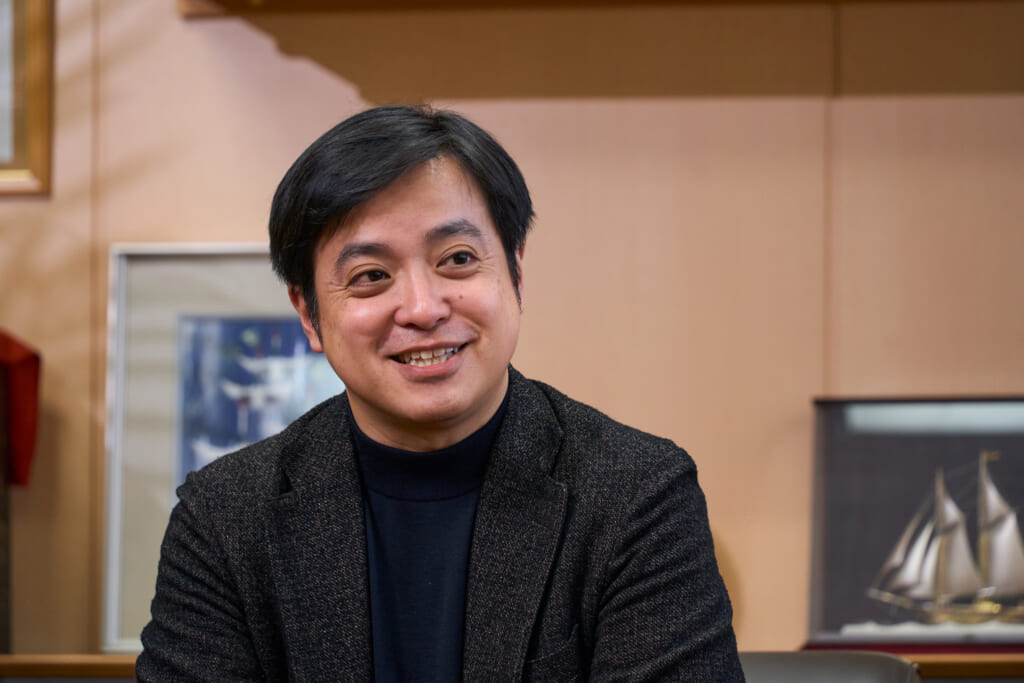 Yamada Shokai Holding Co.Toyohisa Yamada, President and Representative Director
In March 2004, he graduated from the Department of Chemical Systems Engineering, Graduate School of Engineering, the University of Tokyo, and joined Yamada Shokai Co. After serving as Executive Vice President in September 2004, he was appointed President and Representative Director in May 2008.
The reason why we were able to keep up with the changing times was our "muddiness.
-Yamada Shokai, the core company of Yamada Shokai Holding, has been engaged in gas work in Nagoya and the Tokai area for about 120 years since its establishment in 1906. First of all, please tell us about the beginning of its history.
The company's founder, Einosuke Yamada, was approached at the very time when the gas business was to start in Nagoya City in the Meiji era (1868-1912) and gas pipes were to be buried in the ground. The founder was originally from a farming family deep in the mountains of Hyogo, but he had a strong desire to do business by himself. In today's terms, he had an entrepreneurial spirit.
-What exactly was the process?
At the time, the founder was engaged in gas construction at a civil engineering and construction company in Osaka. Then word came that a gas business was to start in Nagoya, and Sakura Okamoto, an engineer at Osaka Gas (who later became the first president of Toho Gas), was assigned as the chief engineer. At that time, the founder of the company was also approached because of his track record at Osaka Gas. After moving to Nagoya, he was recognized for his work and expanded his job to be in charge of gas pipeline construction and indoor piping work.
-The company has been a part of the history of gas in Nagoya.
Yes, we have. Materials and methods of construction have changed over time, and today, as a holding company, we are involved in a wider range of infrastructure, including water, electricity, air conditioning, and telecommunications, but our history is that we have consistently worked in gas construction.
-What do you think is the main reason for the company's continued growth for nearly 120 years?
We ourselves have always been in a state of change. There have been many changes, some of which could be called paradigm shifts. There have been two main changes that I have experienced. One was the shift to in-house sales about 20 years ago. Up until then, our sales activities were such that if we were oriented toward the gas utility, we would get the job. However, the system was changed to allow construction companies to jointly conduct sales activities, and our position changed drastically to one where we were not only facing the gas companies, but also the outside world at large. The other is the deregulation of electricity and gas following the Great East Japan Earthquake. This has made it necessary to provide not only gas, but also electricity, residential water distribution, and a variety of other goods and services. We continue to do our utmost to respond to these changes.
And now, we are in the midst of a new paradigm shift, that of becoming carbon neutral. Not only the way we use energy, but the way energy as a whole is being questioned, and we at Yamada Shokai Holding are considering what we should be doing in this context.
-How is it possible to respond to such changes?
At the root of the company's business lies a "muddiness" that has continued to run through our veins. For example, Yamada Shokai has actively tackled complicated, difficult, and inefficient jobs, such as gas work in urban areas and gas work for large-scale projects. These many years of accumulated experience have become our current strength.
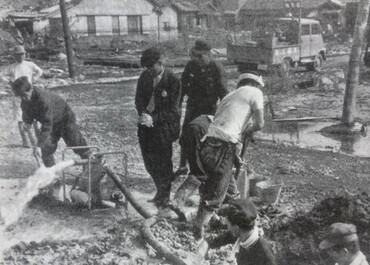
He has always been involved in the reconstruction of the town. Restoration work after the Ise Bay Typhoon in 1959
The venture broke through the defensive posture.
-I heard that you have been working on venture collaboration for 10 years. What was the reason for this?
mountain field There was certainly a sense of crisis about the future. How do we maintain our construction capacity in the face of a declining population? Personally, however, rather than actions based on such a sense of crisis, I took a more positive stance, saying, "Let's take on challenges because of the difficult situation. I feel that this company, like its founder, has the DNA to take on challenges.
-What exactly was the process you started with?
mountain field We started by showing up at open innovation events organized by universities and government agencies. My initial aim was to find something that would improve the efficiency of my company's operations and reduce its workload. However, as I came into contact with venture companies, I gradually became envious of the fact that they had products. Gas work involves piping according to set specifications, using set materials and methods, so there should be no difference in results from other construction companies. In this context, we try to differentiate ourselves through our processes and the abilities of our people. Still, we wondered if we could somehow create our own unique products, or if we could do a proposal-based business. I began to wonder if we could somehow create our own unique products, or if we could do a proposal-based business.
-So you were inspired by the way the venture was organized.
mountain field We have always been involved in infrastructure, and we are very good at completing construction work according to predetermined specifications. On the other hand, we tend to focus too much on the construction work in front of us or worry too much about the future volume of construction work, and tend to leave behind the goals and issues of the users beyond the construction work. In contrast, venture workers have an awareness of the issues first, and they have a strong desire to solve those issues somehow. By being exposed to this passion, our employees are also stimulated and energized.
The true value of gas construction was "resilience."
-What was the reason why you chose RIVANES as your partner from 2023?
Although there was something to be gained from the previous venture partnerships, they did not result in a fruitful business venture. On the other hand, Leave a Nest had the advantage of going as far as to implement it into a business, and had a track record of doing so. That was the main reason.
-Thank you very much. What are your impressions of actually working with Liberace?
What I always feel is that Leave a Nest is always there between us and the venture company. If there is a discrepancy between the two images, they immediately correct the course. If there is a discrepancy between the two images, they will immediately correct the course of events. By having them sort things out in this way, we are able to see our company's assets in a new light.
-In these discussions, the key phrase "Yamada Shokai Holding = Resilience" also emerged.
I was aware of the term "resilience," and our company has always had the experience of rushing in to assist with recovery and reconstruction in the event of a major disaster. However, we had never thought of resilience in relation to our daily operations. Therefore, the idea that the work of Yamada Shokai Holding, Inc. could be abstracted into resilience was refreshingly convincing to me.
When we actually look at our company from this perspective, we find that many things are connected. For example, in our group, some employees are engaged in civil engineering work, while others sell energy-saving equipment for home use. If we say, "We are working to increase resilience," everyone can imagine the value of our work.
In addition, disaster recovery cannot be done in time if preparations are not made until after the disaster has occurred. The reason why we are able to exert our strength in times of emergency is because we have and train engineers through the gas work that we are involved in during normal times. In this sense, the gas work that Yamada Shokai has continued for nearly 120 years can be described as an effort to enhance the "resilience of the city" not only in terms of hardware, but also in terms of software. How to reflect this concept in the company's overall philosophy is a matter for future consideration, but it has certainly been a very significant realization.
Yamada Shokai Holding's major initiatives with RIVANES
November 2023 Participation in Gifu Tech Planter 2023
Through an introduction by Managing Director Tsuchiya of Ogaki Kyoritsu Bank, Ltd, the co-sponsor of the event, the company became the first community development partner to participate in the Leave a Nest initiative.
February 2024 Participation in Malaysia Deep Tech Tour
Mr. Yamada, the president of the company, participated in a tour in Malaysia. He decided to work with Leave a Nest on business development, branding, and recruitment projects throughout the year.
June 2024 Participation in Tech Planter Deep Tech Grand Prix 2024
Participated as a partner in the Deep Tech Grand Prix (fundamental technologies for sensors, AI, robotics, etc.). Awarded the Yamada Shokai Prize to Cibionics (Gunma University) for its development of rebar corrosion detection technology.
September 2024 Speaker at a session of the Hyperdifferential Society of Japan 2024 Osaka/Kansai Conference
Mr. Suzuki, Executive Director, participated as a panelist in the session titled "Drone Services Created by Small and Medium Enterprises and Startups. He discussed how drones can be used in regional infrastructure.
Oct. 2024 Formed a business alliance with Liberaware, a company that develops the world's smallest drones
To realize DX in the infrastructure construction and maintenance market, a pilot team for IBIS2, a drone developed by Liberaware Corporation, was formed within Yamada Shokai HD.
November 2024 Exhibit at SWITCH, one of the largest startup events in Southeast Asia
Through exhibiting at an event that attracted more than 20,000 visitors for three days in Singapore, and through on-site inspections, the group explored issues and technologies in Southeast Asia in the four fields of energy, disaster prevention, housing and environment, and infrastructure and maintenance.
November 2024 Participation in "Add Venture Forum," an event to create new opportunities for researchers
Discuss and gather young researchers on the theme "What do you think of 'resilience' of people and the earth? and gather friends.
November 2024 Participation in Gifu Tech Planter 2024
Participated for the second term as a regional development partner. Awarded Yamada Shokai Award to Tomoshibi Marche Corporation, which aims to upcycle food by-products.
December 2024 Launch of the Tokai Branch of the "LVNS RESILIENCE PROJECT" in collaboration with Leave a Nest and the TerraLab Disaster Response Operations Center.
Ltd., with which we have entered into a research and capital alliance, has begun research and development to enable rapid recovery in the event of a disaster, based at the Disaster Countermeasures Operation Center established at Nagoya Airport.
January 2025 Participation in Real Tech Global Fund No. 2
To co-create with more ventures, LP invested in a fund that aims to build a deep tech ecosystem, mainly in Southeast Asia.
In the Tokai areaBecome a point of contact for the venture.
-One of the pillars of our collaboration with Liberace is to expand into Southeast Asia, but even before that, Yamada Shokai Holding started working on this.<
We had high expectations for Southeast Asian human resources as future leaders. However, as our policy, we did not want to be in a situation where the employees we hired would return to their home countries after a few years and say, "I don't know what happens to them after they retire. Therefore, in 2020, we established our first overseas subsidiary, YS Design Vietnam Limited, to create an environment in which we can build long-term relationships. Southeast Asia is also a huge market with an overall population of approximately 700 million people. I had the image for some time that there were expanding business opportunities and that there must be areas in which we could help solve local problems.
-And on top of that, what were the benefits of working with Liberace?
What was clearly different was the perspective of "bringing back local knowledge to Japan. Instead of "bringing" from Japan to the Southeast Asian market, we were "bringing back" to Japan the technology and knowledge of local ventures. This idea had never occurred to me. We participated in a tour of deep tech ventures in Malaysia and exhibited as a Japanese venture at SWITCH, one of the largest startup events in Southeast Asia, held in Singapore, but the theme of discussions there was always "What can we do together in Japan? What can we do together in Japan?
-Did you make any new discoveries by comparing Japanese ventures with Southeast Asian ventures?
In conclusion, my greatest discovery was the realization that "there is no difference between Japan and Southeast Asia. Although there are differences in backgrounds such as countries and languages, there is no difference in the attitude toward problem solving and the passion that goes into it. This is why we were able to easily enter into essential discussions about how we can work together and what we can achieve together.
-Was the same perspective the basis for your participation in the Real Tech Global Fund 2, which specializes in supporting global deep tech ventures, particularly in Southeast Asia?
You are right. On top of that, the reason why we invested in the fund is because we can meet more ventures. It is clear that it is more efficient in terms of exploration to make contacts through a fund than to communicate directly ourselves. If we find a partner in the process that we would like to work with, we will consider investing directly in the company again.
-Finally, what is your outlook for the future in light of your collaboration with RIVANES over the past year?
Currently, through our collaboration with Leave a Nest, we are in the process of creating a pipeline of new businesses one after another. To be honest, this is an achievement far beyond our initial expectations, and we feel that the possibilities for the future have truly expanded. We are now faced with the question of how to make this a business reality. To put it another way, what are the true assets of Yamada Shokai Holding and how do we collaborate with venture companies?
In the first sense, we are a gas construction company, and our strengths lie in our ability to install things, operate heavy equipment, and have an existing customer network. However, we do not want to limit ourselves to these areas, but would also like to take on the challenge of using our more essential knowledge to develop, for example, completely new infrastructure facilities and equipment maintenance methods in collaboration with venture partners.
What I have felt again over the past year is that "Yamada Shokai Holding is a company in the Tokai area, centering on Nagoya. I am very proud of this, and it is also the asset that allows us to exert our strength the most. Therefore, in a sense, we would like to be an agent for all ventures, and we would like to be a presence that can support their activities in this area. Whenever a venture company, whether global or domestic, is active in the Tokai area, they can always turn to Yamada Shokai Holding for advice. This is the kind of vision I am currently envisioning for the future.
In addition, thisSuch organizational transformation cannot be achieved by the will of a single representative alone.Finally,We will hear from old employees who have supported Yamada Shokai's business about their enthusiasm for change and their guidelines for the future.
Ready to reform 120 years of history and create beautiful work
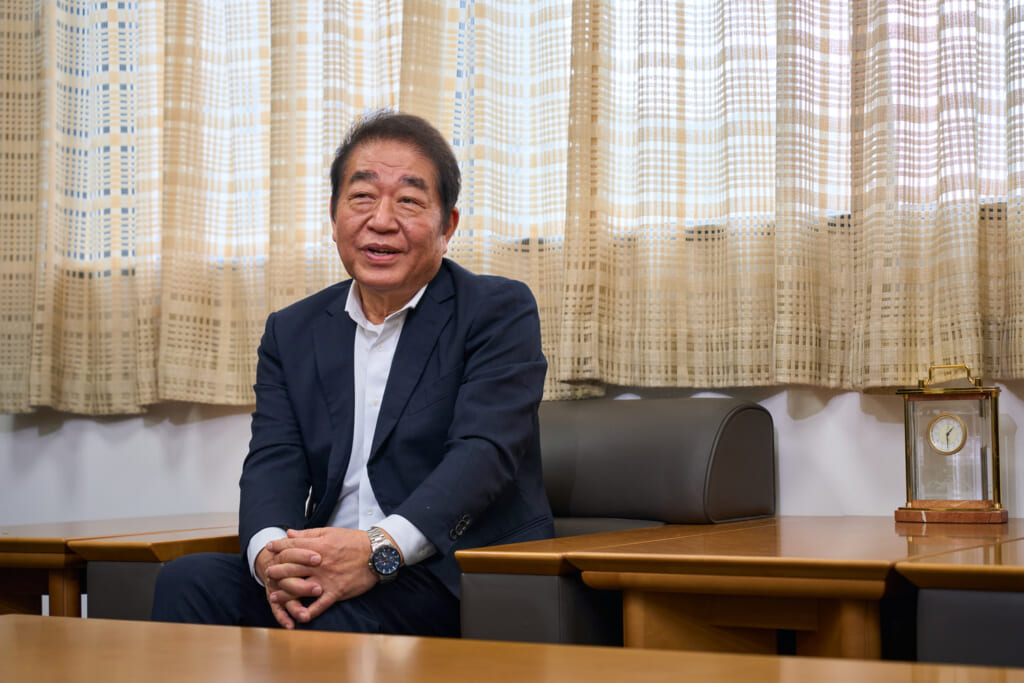 Yamada Shokai Holding Co.Mr. Hiroyuki Suzuki, Senior Managing Director
For the past 10 years, I myself have been continuously searching for new business pillars. My first impression of Leave a Nest was that everyone, including the venturers we were introduced to, was just so hard working. Therefore, I was able to trust them immediately.After a year of activities, we strongly feel that an affinity has emerged between new business ideas and existing businesses.
There are many new and interesting themes, but our strength lies in the know-how we have accumulated through more than 100 years of infrastructure construction and the "people" who have continued to work in this business. We cannot afford to change this. Having joined this company as a new graduate and having been nurtured for over 40 years since the time of the previous president, I feel it is my mission to continue to think about the raison d'etre of Yamada Shokai.
In our gas work, each site supervisor is responsible for his or her own work and basically makes his or her own decisions on how to proceed with the work. Because of this, there has always been an atmosphere of a "one-man company" and each person has his or her own standards of what a job should be like.
In order to get them to accept a new business, it is important to convince them of "why Yamada Shokai is doing it. That is why, in working with Leave a Nest, I first dive in myself and make sure to finish the job. If I don't use words based on my own experience, my employees won't understand what I have to say.
I believe that the essence of work, whether it is new business or venture collaboration, is to be prepared. I would like to create beautiful work that I can be proud of for the employees who have continued to support the company.
Acting as a bridge between "tradition" and "novelty" and creating a climate for challenge.
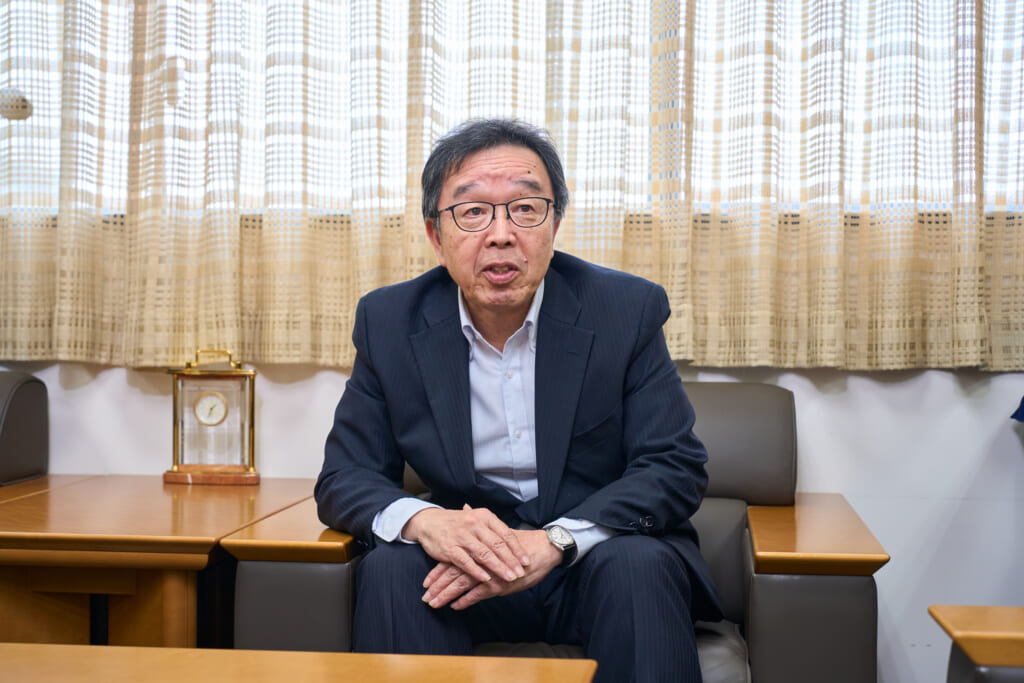 Yamada Shokai Co.Mr. Toshiyuki Kimura, Innovation Room Manager
Several years ago, I was appointed to head the Innovation Room and have gradually increased my contacts with academia through university events. However, my efforts with Leave a Nest are completely different, both in the range of researchers and ventures we meet and in the speed of collaboration. Above all, I am amazed every time by the abundance of business ideas that are drawn out.
One of the most memorable activities in the series of activities was the collaboration with Liberaware, a developer of the world's smallest drone, which I had never imagined a year ago, but I actually attended a drone pilot license course to obtain a license and also served as a pilot during the demonstration test.
At first, I struggled with the complex operations and sometimes wondered if I was too old for this, but coming in contact with new knowledge is very stimulating and a truly enjoyable experience. When I practice piloting during my lunch break, younger employees, whom I had only talked to in the course of my work, show a keen interest in it.
Originally, I was the head of the construction administration department, where my important role was to act as a liaison between the craftsmen on site and the general affairs department at the head office. Therefore, from now on, I would like to serve as a bridge between employees who have cherished traditions and the company, which is being reborn with a new philosophy.
In addition, I was actually selected to take charge of the Innovation Room after I retired from my position. In this sense, I feel that I must set an example that even people of a certain age can be active at Yamada Shokai. I would like to create a "climate for taking on challenges" in this company.
![New era of small and medium-sized companies and ventures will change Japan and the world [National Knowledge Manufacturing Conference 2025 Session Digest].](https://km.lne.st/wp-content/uploads/sites/81/2025/03/openingsession2-1024x682.png)
![KOBASHI Group] Evolution of Local Small and Medium-Sized Enterprises Caused by the Shift to Knowledge Manufacturing / Creating Businesses Like Startups While Being a 100-Year-Old Company (President x Next Generation Dialogue)](https://km.lne.st/wp-content/uploads/sites/81/2024/03/kobashi_tatsuzaki_top-1024x683.jpg)