- Speech/Session Reports
Top Management’s Commitment to “Branding” Accelerates Growth — How to Achieve Behavioral Change Among Employees and Organizational Transformation — [Digest of the 2026 National Knowledge-Based Manufacturing Conference]
2026.05.21![Top Management’s Commitment to “Branding” Accelerates Growth — How to Achieve Behavioral Change Among Employees and Organizational Transformation — [Digest of the 2026 National Knowledge-Based Manufacturing Conference]](https://km.lne.st/wp-content/uploads/sites/81/2026/03/envision_branding-1024x682.png)
To shift a company toward the future, it is essential to promote behavioral change among employees and transform the organization. The first step in this process is for “top leadership to personally formulate a vision.” In this article, we present a summary of the panel session held at the National Knowledge-Based Manufacturing Conference 2026 titled “Top Leadership’s Commitment to ‘Branding’ Accelerates Growth: How to Achieve Employee Behavioral Change and Organizational Transformation” (Session Partner: Envision Co., Ltd.). Top executives who have driven organizational transformation firsthand and experts who have led corporate branding initiatives for numerous companies as external partners—we invite you to watch this in-depth discussion on “Branding for a New Era” from these two distinct perspectives.
A Major Misconception: Branding Is Not Just About “Creating a Logo”
Kuraimoto In this session, I’d like to discuss a topic that differs from the typical perception of branding. Rather than focusing on advertising and marketing—such as creating a new logo, running short-term campaigns, or raising company awareness—we’ll proceed with our discussion based on the hypothesis that the key to properly understanding branding lies in the subtitle: “How to Achieve Behavioral Change Among Employees and Organizational Transformation.” First, I’d like to ask Mr. Kobashi—who, as the fourth-generation leader of a family business founded in 1910, has spearheaded its transformation—to introduce himself from the perspective of “what he has changed and how.”
small bridge My name is Kobashi, and I work for KOBASHI HOLDINGS, a company based in Okayama that manufactures and develops agricultural machinery and provides manufacturing support services. I joined Kobashi Industries, the core company of the KOBASHI Group, in 2008. From the very beginning, I wanted to “revitalize the group as the next-generation leader.” At the same time, faced with structural challenges such as Japan’s declining population and the aging farming population, I felt a strong sense of urgency that “we must do things differently than we have in the past.”
I became president in 2016, at the age of 34. Three years later, there was a moment—just as the title of this session suggests—when I made a firm resolution. I adopted the phrase “Cultivating the Earth” as our new management philosophy. This does not negate our previous management philosophy of “replacing manual labor on farms with machinery.” While we have been cultivating farmland up until now, from here on out, we will cultivate the entire Earth. In other words, it was a redefined version of what we had been doing all along.
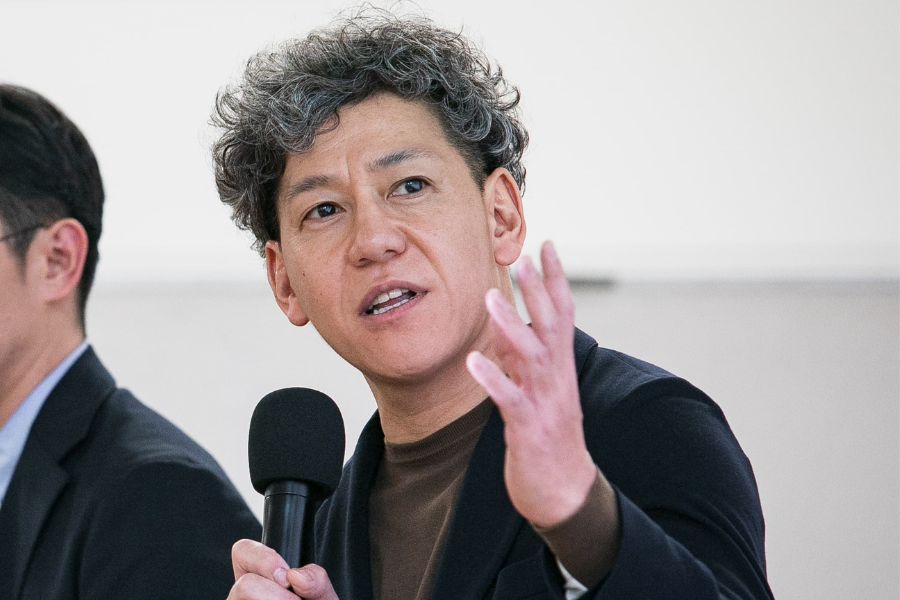
Mr. Shojiro Kobashi, President and Representative Director, KOBASHI HOLDINGS Co.
Born in Okayama Prefecture in 1982. Since its founding in 1910, the company has promoted the mechanization of agriculture as a manufacturer of agricultural machinery. In 2017, following the reorganization of the KOBASHI Group, KOBASHI HOLDINGS Co., Ltd. was established, and he assumed the position of President and CEO. Guided by the philosophy of “Cultivating the Earth,” he applies the knowledge and technology cultivated over more than 100 years to tackle global challenges. In 2020, he established KOBASHI ROBOTICS Co., Ltd. and launched “Manufacturing Booster,” a program that provides comprehensive support for startups in manufacturing. He aims to bring technologies that solve global challenges into societal use as soon as possible.https://www.kobashiholdings.com/
Kuraimoto So, you’ve established a process for shaping the company’s new direction, starting with a redefinition of its management philosophy. As a professional who supports corporate branding, how does this look to you, Mr. Fujimaki?
Fujimaki My name is Fujimaki from Envision. I am truly honored to have this opportunity to discuss management and branding with two exceptional business leaders, Mr. Kobashi and Mr. Hiraoka. I look forward to our discussion today. In fact, the concept of branding is subject to various definitions and perspectives among scholars, experts, and business leaders—there isn’t necessarily a single, universally accepted understanding. How it is perceived varies depending on the external environment, competitive position, and industry, which is why differences in understanding and misunderstandings regarding branding are common. At Envision, we view “management = branding.” In that sense, I felt that Mr. Kobashi’s efforts—uncovering the “essence” of his company from its history and redefining that value in line with the changing times—were the very essence of branding.
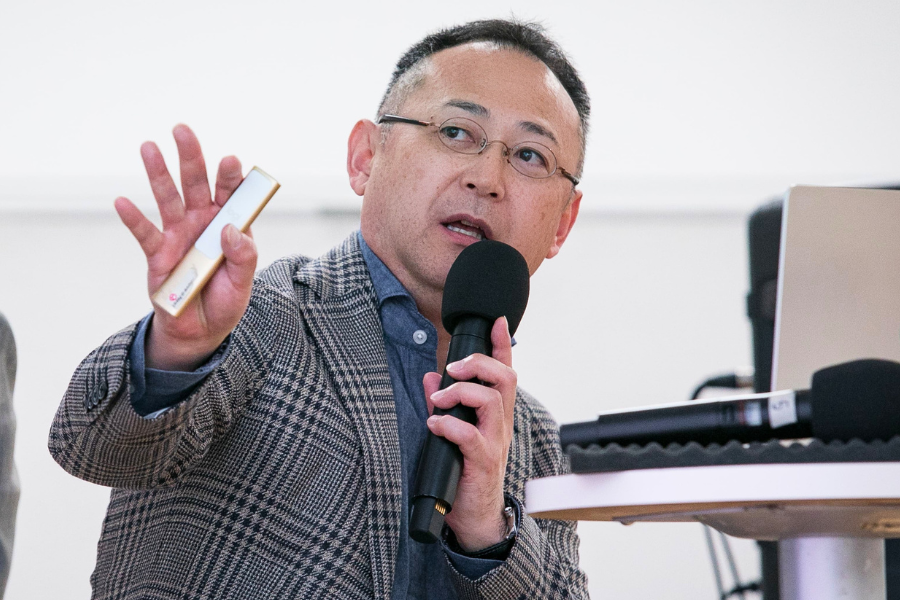
Isao Fujimaki, COO and CBO, Envision Inc.
After completing graduate school, he built his career as a planner at major domestic advertising agencies and other firms. He then served as a Strategy Director at Interbrand Japan, the world’s largest brand consulting firm, where he led large-scale projects across a wide range of industries and sectors—including global markets—with a focus on B2B. After that, he oversaw branding for the Rakuten Group and managed the branding and marketing organization at KPMG Consulting before joining Envision in 2024. He is dedicated to creating a better society through the creation of Japan-based brands that accelerate social change, the development of creative solutions to social issues, and the democratization of branding. He is a graduate of the Kyoto Creative Assemblage Executive Program for working professionals.https://envision-inc.jp/
Kuraimoto Thank you. Let’s discuss this in more detail later. Next, Mr. Hiraoka, please introduce yourself.
Hiraoka My name is Hiraoka. After serving as president of BIPROGY (formerly Nihon Unisys) for eight years starting in 2016, I currently serve as an advisor. Even before becoming president, when I was still a senior managing director, I had been thinking, “I want to change this company.” Nihon Unisys was a systems integrator by industry, and while it had achieved growth through the so-called “person-month” business model—charging a set amount per person-month—I felt a sense of crisis that continuing with that model would lead to a dead end sooner or later.
Therefore, in order to break away from the “person-month” business model and become a company capable of providing new value to our customers, we formulated a new corporate message, “Foresight in sight,” and positioned it at the core of our mid-term management plan. Throughout this formulation process, I worked closely with Mr. Fujimaki, who was with Interbrand Japan at the time. Furthermore, to encourage our employees to look outward, we introduced the concept of the “business ecosystem.” At the time, the term was still unfamiliar to the general public—so much so that people would ask, “Does ‘ecosystem’ mean environmental business?”—but we wanted to use it as a catalyst to create a new model for our company that differed from the past. Later, in 2021, we proposed “Digital Commons,” a further expansion of the business ecosystem concept, and formulated our purpose: “We will unlock the potential of technology through foresight and insight to create a sustainable society.”
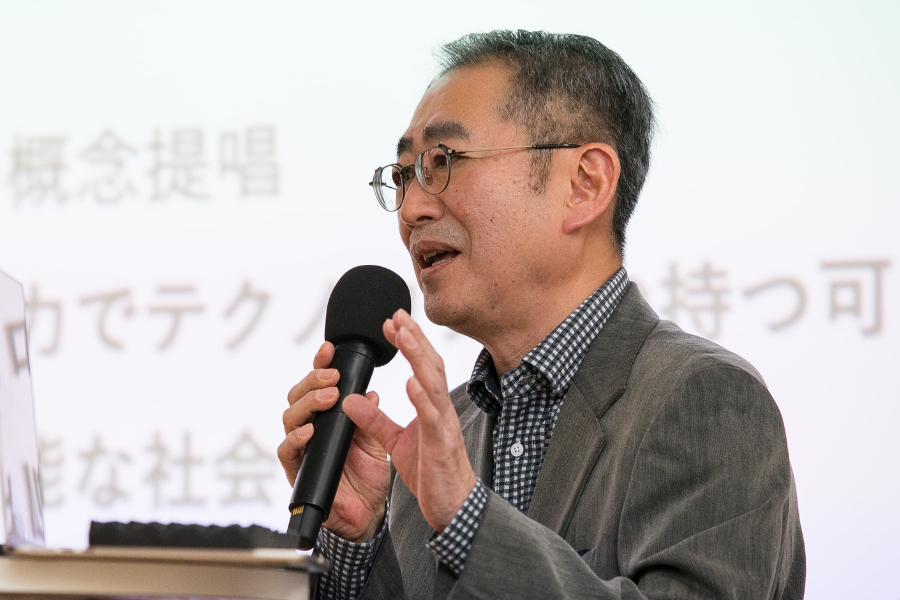
Mr. Akiyoshi Hiraoka, Advisor, BIPROGY Corporation
He graduated from the Faculty of Science and Engineering at Waseda University in 1980. That same year, he joined Nippon Uniback Co., Ltd. (formerly Nippon Unisys Co., Ltd., now BIPROGY Co., Ltd.). In April 2016, he was appointed President and CEO. He advocated for new concepts such as the “business ecosystem” and “digital commons,” and spearheaded a corporate brand renewal—including the change of the company name from Nihon Unisys to BIPROGY. Amid an era of profound change in which society as a whole was shifting decisively toward the digital age, he consistently pursued initiatives with an eye toward the future. He stepped down as President and CEO in March 2024 and assumed the role of Advisor in June of the same year, a position he holds to this day. He has served as a Director of Ribanes Norms Co., Ltd. since July 2025.https://www.biprogy.com/
Kuraimoto And so, in 2022, the company changed its name from “Nippon Unisys” to “BIPROGY.” Generally speaking, I think this name change is viewed as a branding initiative, but it wasn’t specifically mentioned in what you just said. What did the name change mean to you, Mr. Hiraoka?
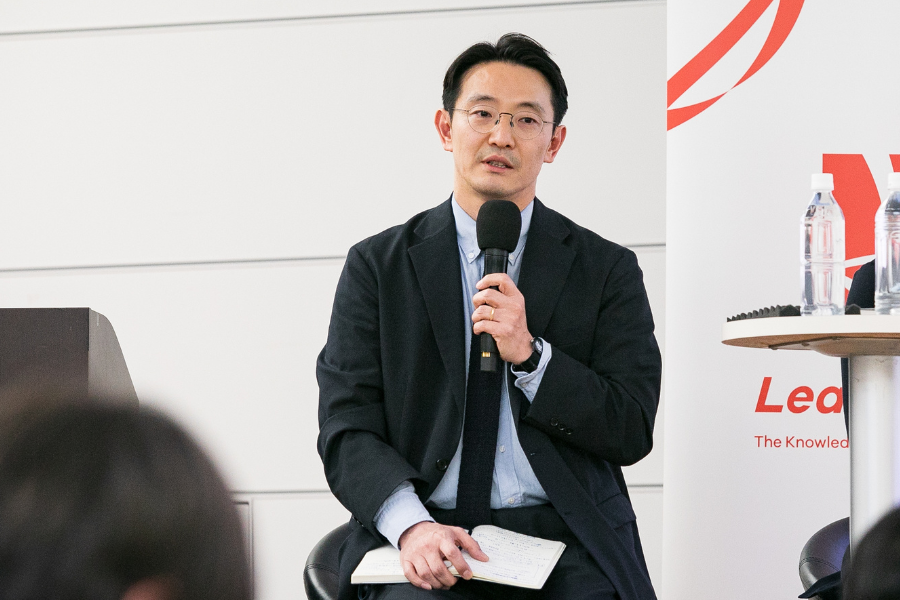
Hiroyuki Kuramoto, Director, Ribanes Nooms Co., Ltd.
Graduated from the Faculty of Letters at Tohoku University. After working in editing, writing, and advertising production at a PR firm, he founded MANN, Inc. The company joined the Lifeness Group in 2021 and changed its name to Lifeness Norms, Inc. in 2025. Anticipating an era in which societal values are shifting from economic growth to problem-solving, the company has adopted the mission of “establishing organizational norms and accelerating the growth of companies that contribute to the planet.” It carries out new projects for major corporations as well as branding initiatives for mid-sized, small, and startup companies. Furthermore, through activities such as editing the book *The New Era of Knowledge Manufacturing* by Yukihiro Maru, the company is working to articulate the unique concepts of the Lifeness Group.https://n.lne.st/
Hiraoka That’s right. Of course, changing the company name is a major event, but simply changing it doesn’t mean anything. Our thinking was that we could only build on this success by thoroughly promoting internal branding in advance and making the change at a time when our employees truly understood and accepted it. In other words, I believe the essence of branding lies in what we’ve been doing for over 10 years—since my time as Senior Managing Director—namely, proposing new concepts, restructuring the organization to align with them, and continuously implementing initiatives to gradually encourage behavioral change among our employees and business partners alike.
Related Article: “The Challenge of Corporate Branding: Weaving a Context That Connects the Past, Present, and Future to Drive Organizational Evolution”
https://terasu.biprogy.com/article/feature-envision01/
Branding is a company-wide transformative initiative that redefines and embodies a company’s “identity,” and it is an investment in the future.
Kuraimoto Building on the sustained efforts of our two top executives, we’d now like to ask Mr. Fujimaki of Envision—a branding expert—to share his perspective on the question, “What exactly is branding?”
Fujimaki I’ll begin by acknowledging that there are various ways to view branding. Generally speaking, when people think of branding, they tend to imagine B2C, marketing-driven initiatives—such as promoting products through TV commercials and campaigns. Of course, such approaches have value if they align with the intended goals. At Envision, however, we take a broader view. In Japan—a mature society and a nation facing unique challenges—we are committed to focusing on branding that contributes to social change and helps make the world a better place, even if only in small ways. More specifically, we collaborate with executives and leaders involved in B2B operations at the many small and medium-sized enterprises (SMEs) that underpin Japan’s industrial base. While supporting them in their branding efforts from a management perspective, we also keep in mind the local communities to which they belong, as well as the global markets that lie beyond.
Based on this background and our vision, we define branding as “anticipating change, redefining our desired future state and aspirations, and transcending the boundaries of our business and organization to ‘grow toward the next era.’”apparentlyWe define it as “company-wide transformation initiatives.” From this perspective, I view the remarks made earlier by Mr. Kobashi and Mr. Hiraoka as a prime example of branding. It involves identifying the unique “essence” of the company—the brand—within its historical context and redefining its unique value and DNA in line with the changing times. Then, using that as a starting point, we embody it in the business activities and organizational structures of each department. It’s not just about external communications like marketing and advertising; all departments—including R&D, production, manufacturing, marketing, HR, and intellectual property—align their efforts with the goal of “redefining our unique raison d’être (= identity) and delivering value to society,” and act in unison. We view this series of company-wide transformative initiatives as branding—which is, in essence, management itself. Therefore, it is not a one-time expense, but rather an investment in the future.
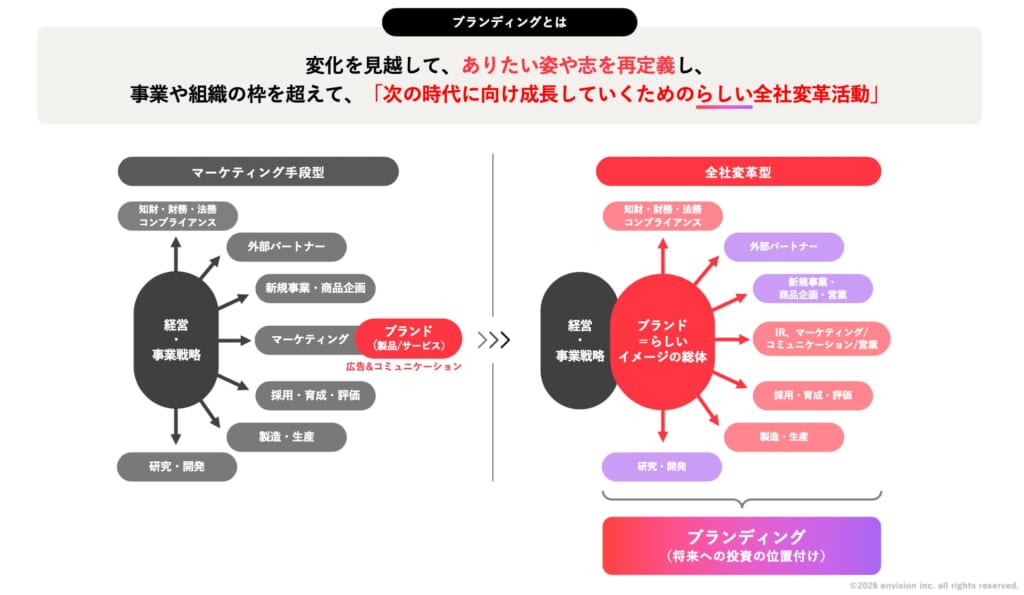
small bridge So, does that mean branding is all about ensuring consistency across the entire organization? Take “compliance,” for example—it’s about embedding a company’s DNA and organizational culture so deeply that, as a result, employees’ behavior naturally changes.
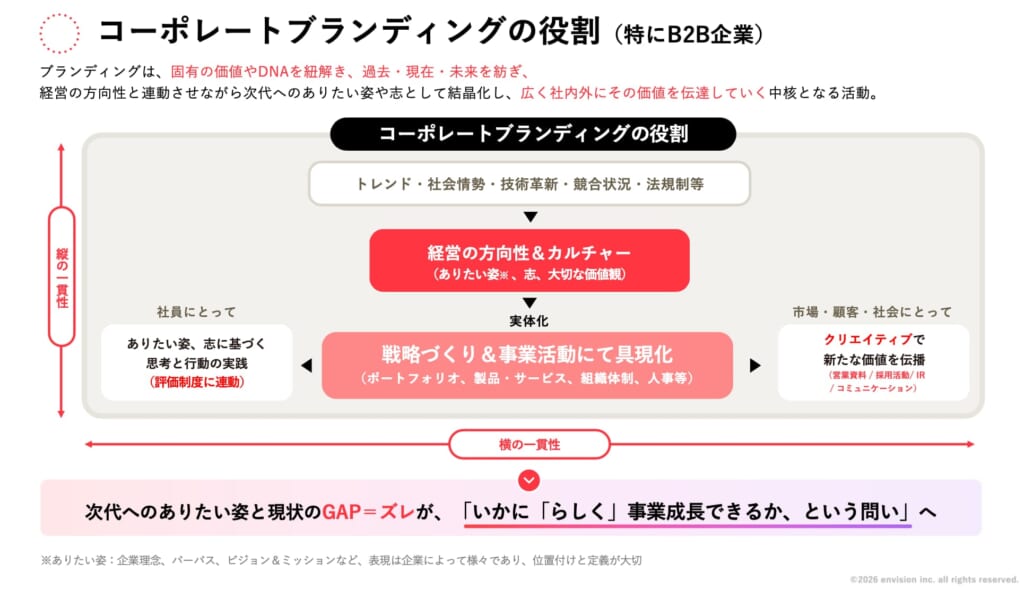
Fujimaki I think you’re absolutely right. While legal compliance is, of course, a fundamental prerequisite, by exploring what role compliance should play for the KOBASHI Group—which upholds the philosophy of “cultivating the Earth”—we should be able to establish a “KOBASHI-style approach to compliance.” In this way, our approach to branding is based on the idea that “every department should keep our company’s brand in mind.”
Hiraoka That’s a way of thinking that’s directly linked to business management itself. At BIPROGY, our purpose is “To unlock the potential of technology through foresight and insight, and create a sustainable society.” However, that purpose is meaningless unless it is properly linked to our actual business strategy. It is precisely this connection that drives behavioral change among employees and within the organization.
Fujimaki Corporate branding is a management exploration of “who we are”; it is viewed as the very process of creating value in future society while continuously evolving and adapting to change. Furthermore, it is crucial to ensure that new businesses, products, and services align with the company’s strategic direction and branding philosophy, and that decisions are made based on a consistent sense of “brand identity.” It is also essential to assess whether employees’ thoughts and actions are aligned, whether they operate autonomously, and whether this mindset is firmly embedded within the organization’s culture. In other words, activities first gain momentum from within the company and among employees, and then lead to external communications (which are primarily articulated and visualized through creative power). Unless this integration is achieved, these efforts will ultimately amount to nothing more than one-off initiatives. I believe this is both the challenging aspect of branding and, at the same time, an extremely important point.
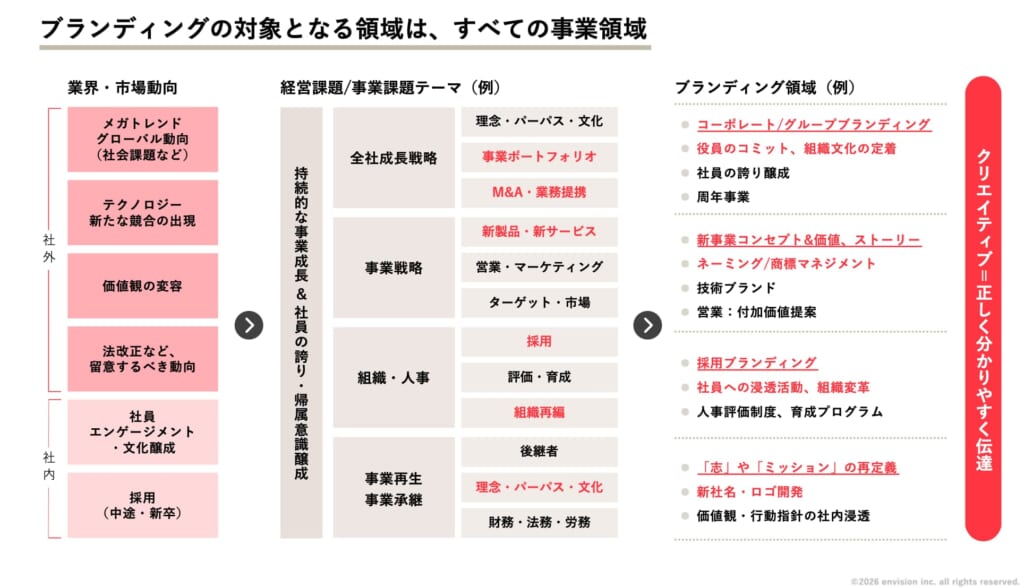
Fujimaki From the perspective outlined above, branding applies to all areas of business. In other words, this includes the corporate sphere, the business, product, and service spheres, the organizational and human resources spheres, and—for small and medium-sized enterprises—the areas of business revitalization and business succession.
The determination embodied in our management philosophy, “Cultivating the Earth,” and the challenge of instilling it throughout the organization
Kuraimoto In 2019, Mr. Kobashi adopted the bold management philosophy of “Cultivating the Earth.” How did this phrase come about? For example, did you consult with anyone?
small bridge No, I made the decision on my own without consulting anyone. When I became president in 2016, my father told me, “From now on, I won’t interfere in any way. Make all the decisions yourself,” and I took over the company. At that moment, I felt strongly that, just as my father had grown the company and passed it on to me, I, too, wanted to grow it even further and pass it on to the next generation. However, as a matter of reality, the Japanese agricultural machinery market is steadily shrinking, and it will be difficult to grow the company in the future simply by “replacing farmers’ manual labor with machinery.” If that’s the case, we have no choice but to go global. I believed that the phrase “Cultivating the Earth,” as our management philosophy for going global, would surely resonate with our employees.
Kuraimoto So that’s how certain you were, then.
small bridge Yes. It was something I felt I could “bet my entire life on.” And I didn’t just announce it the moment the idea popped into my head. I nurtured it within myself for three years, and since my resolve never wavered, I made the official announcement. However, in reality, it wasn’t that simple. I did my best to convey my vision at a company-wide meeting, but the reaction from most employees was, “I’m not quite sure what you mean.” On the other hand, when I talk about “Cultivating the Earth” to people outside the company in settings like this panel session, it’s very well received. To be honest, I’ve been constantly wondering, “Which of these reactions is the real one?”
Hiraoka I understand that struggle all too well. Instilling a company’s philosophy throughout an organization is truly a daunting task. When it comes to this, there’s no choice but to keep communicating it persistently, using every trick in the book. Even when conveying the same message, try changing the way you say it or the visuals you use to explain it. However, if you’re too persistent, people will get annoyed and think, “Here we go again.” So, the PR team got creative: they organized workshops for employees and posted graphic recordings of those sessions on our internal intranet. I think it was by continuing to visualize and present the message in this way that it gradually took root.
Fujimaki In a sense, it’s inevitable that a gap will arise between the perspectives of top management and those of employees. After all, different positions naturally lead to different viewpoints. Of course, it is necessary to accurately convey a sense of urgency regarding the future in light of changes in the external environment and other factors. However, when it comes to instilling our philosophy and aspirations throughout the company, what is crucial is not simply introducing a new philosophy, but rather carefully unraveling the context of the past—that is, our history—linking it to both existing and new businesses, and thereby transforming the organization. In other words, we must curate these elements so that the future we aim for is connected to the present and the past as interrelated concepts. I believe we need to foster employees’ understanding by “redefining” “our new roles and purpose,” just as Mr. Kobashi mentioned.
Hiraoka That’s certainly true. As another strategy to foster internal adoption, when we formulated the corporate message “Foresight in sight” during my time at Nihon Unisys, we created a visual framework that positioned all existing businesses as means to realize “Foresight.” We also reorganized the company at the same time. People are, by nature, creatures who resist change, so it’s only natural to feel resistance to new initiatives. So, we decided to create an environment where “change is the norm.” Instead of the usual once-a-year organizational restructuring, we implemented small, incremental changes multiple times a year. Employees told us it was “too chaotic,” but after two years, they got used to it. Looking back now, I realize we took a rather forceful approach, but I believe it was the right decision in the end.
"Creating Experiences of Success" and "Linking Them to Performance Evaluations" to Foster Employee Behavior That Embodies Our Philosophy and Aspirations
Kuraimoto We’re seeing more and more specific processes emerge for instilling our philosophy and aspirations. What do you think, Mr. Kobashi?
small bridge We’re currently exploring various approaches. In particular, we’re focusing on establishing KOBASHI’s Code of Conduct and ensuring all employees adhere to it strictly; at the core of this is “sincerity.” We want KOBASHI employees to always act with sincerity—not only on the manufacturing floor but in all other situations as well. For example, even when it comes to matters that are difficult to report to a supervisor, employees should convey the facts with sincerity—they must not lie or exaggerate. Furthermore, when negotiating with external partners, I want them to approach the other party with respect and sincerity, rather than adopting an attitude of “even one yen cheaper.” I understand that maintaining sincerity in every situation is KOBASHI’s core competency—one we’ve built up over our 115-year history as a manufacturing company. It is precisely because sincerity lies at the foundation of everything we do that we are recognized worldwide, and this ultimately leads to the realization of our philosophy of “cultivating the earth.”
Fujimaki I believe what we’ve just discussed is a crucial point in bringing our corporate philosophy and vision to life. First, can we establish behavioral guidelines that reflect our identity and ensure that all employees act in a way that aligns with those guidelines? Next, does that behavior lead to “quick wins” (small successes) that are recognized by customers? This creates a genuine sense that “we can believe in these new principles and aspirations.” Finally, whether the principles take root depends on how well they are integrated with the “performance evaluation system.” In other words, it depends on whether the results of taking action to bring the vision to life are appropriately reflected in individual evaluations. If this element is missing, employees will feel that “even if we do this, it won’t make a difference,” and the vision will ultimately fail to take root. However, balancing the need to deliver short-term results with the need to act based on a medium- to long-term perspective is by no means easy.
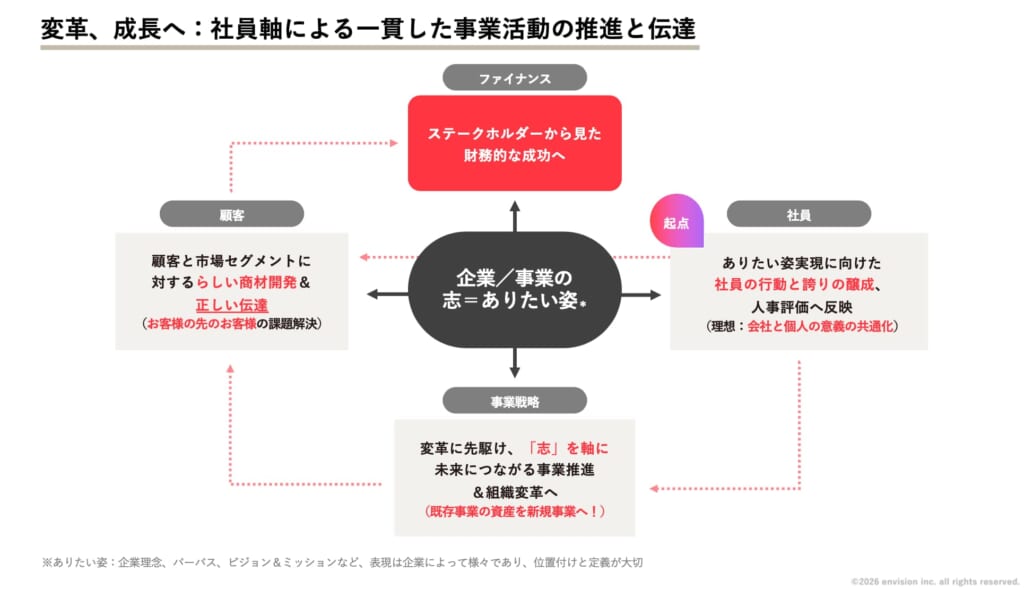
Hiraoka That’s an important point. In reality, it’s extremely difficult to link behavioral change to performance evaluations. This is because evaluations inevitably tend to focus on business results, but the timelines for “the results of behavioral change” and “current business performance” are different. If you try to improve your evaluation score alone, “not changing your behavior” actually becomes the right answer.
small bridgeThat's certainly true.
Hiraoka So I revised our HR system and added a new evaluation criterion for managers: “Are they encouraging their subordinates to take on challenges?” Regardless of whether they achieve results, the key is whether they are encouraging challenges and acknowledging them. This is because, in order to get employees to take on new challenges, we must not blame them for their failures.
Kuraimoto It really makes you shrink back when you're blamed for a mistake, doesn't it?
Hiraoka Back then, I kept saying, “The key performance indicator (KPI) for success is the number of failures.” I’d say, “I’m the one who fails the most at Nihon Unisys. If you fail a lot, you’ll become president” (laughs). While making this phrase catch-on, I worked to instill an evaluation criterion that focused on whether people were taking on challenges.
small bridge That's really great. It's incredibly cool. It's very helpful.
Fujimaki That’s excellent insight and leadership. Another key factor will be how to engage the HR department based on our philosophy and vision.
The pride of top management is what transforms our current assets into opportunities for the future.
Kuraimoto It's almost time to wrap things up. Please share a few closing remarks.
small bridge In 2019, we adopted the ambitious theme of “Cultivating the Earth,” and I’ve reaffirmed my commitment to continuing to pursue this goal with unwavering dedication. Perseverance is a form of sincerity, and I hope that by setting this example as a leader, I can inspire our employees to take on new challenges.
Hiraoka As the head of an organization, anyone would likely be thinking, “We need to change,” while keeping an eye on the trends of the times. This is especially true for someone like Mr. Kobashi, who leads a company with a long history. Making changes requires resolve, and while this can be quite challenging, if you can muster the courage to take that first step, you will surely find a way to set the organization in motion. I hope that my experiences can be of even the slightest help to all of you.
Fujimaki Every company surely possesses a vein of “uniqueness” that holds the potential to shape its future. As we observe social trends and global shifts, the question is: How can we transform our existing assets into opportunities for the future? I believe the pride and conviction of top management serve as the starting point for this. Beyond this transformation, I believe that—centered on the small and medium-sized enterprises and startups gathered here today, and drawing on the collective knowledge of large corporations and financial institutions—a broad network will expand (a “circle of resonance”). This will give rise to new value and meaning, which will gradually act as a centrifugal force, spreading throughout society. I believe that this will energize Japan as a whole and lead to a bright future. I would be delighted if you could use the branding approaches discussed in this session as a starting point for that journey.
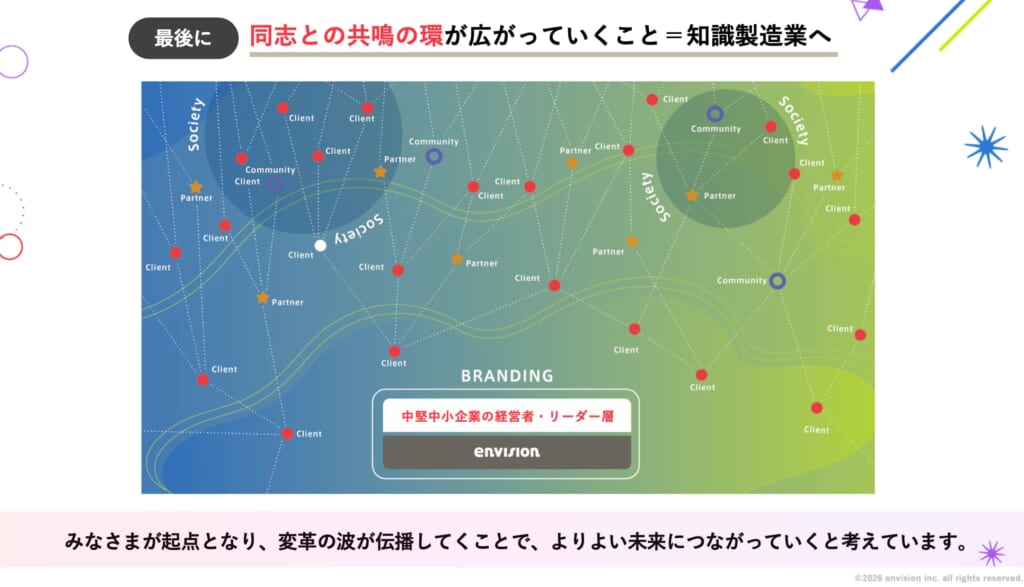
Kuraimoto: Thank you, everyone, for coming today!
![KOBASHI Group] Evolution of Local Small and Medium-Sized Enterprises Caused by the Shift to Knowledge Manufacturing / Creating Businesses Like Startups While Being a 100-Year-Old Company (President x Next Generation Dialogue)](https://km.lne.st/wp-content/uploads/sites/81/2024/03/kobashi_tatsuzaki_top-1024x683.jpg)
![KOBASHI Group] The Evolution of Local Small and Medium-Sized Enterprises through the Shift to Knowledge Manufacturing / A Fusion of Philosophy, Speed, History, and Innovation. The "way of seeing things" has completely changed.](https://km.lne.st/wp-content/uploads/sites/81/2024/03/774dec9ff8af459f103a03f6208f1c03-1024x683.jpg)