- Speech/Session Reports
A long-established venture company in business for over 100 years talks about the practice of knowledge manufacturing .
2024.11.11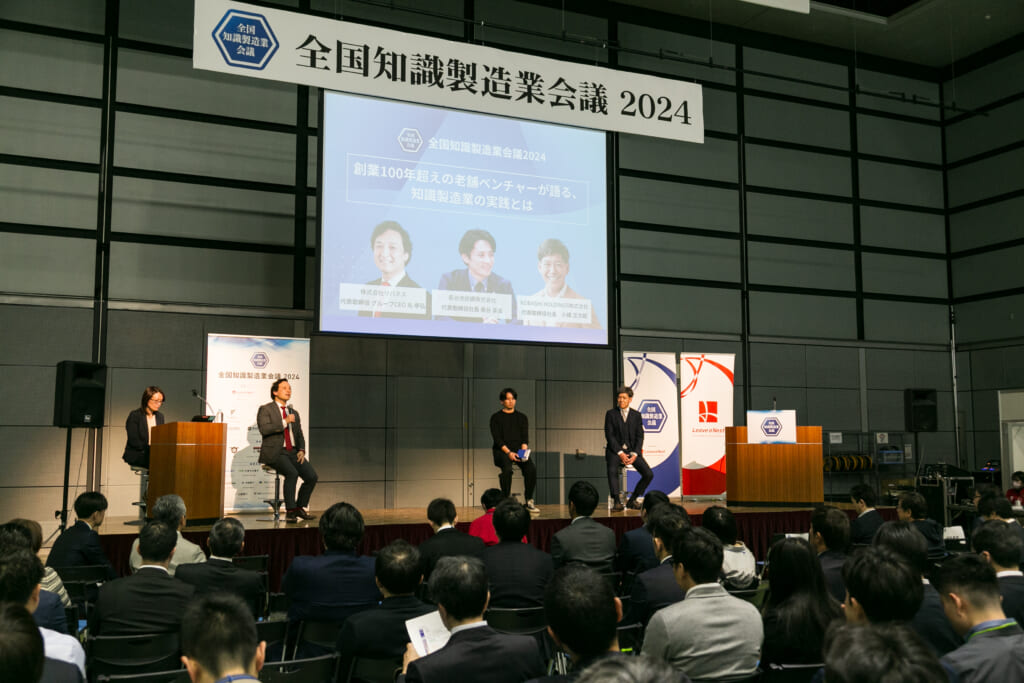
HASETORA BOSEKI and KOBASHI HOLDINGS are both local small and medium-sized enterprises that have been in business for over 100 years, and at the same time can be called "well-established ventures. Both companies have always passed the baton of business to the present by solving social issues unique to their times. This article introduces practical examples of the two companies that can serve as major hints for small and medium-sized enterprises to make the shift to knowledge-based manufacturing.
*This article is a digest of the panel session "What an Established Venture with Over 100 Years in Business Says about Knowledge Manufacturing Practices" at the National Knowledge Manufacturing Conference 2024, held on April 12, 2024.
Hasegora Spinning survived 137 years by practicing knowledge manufacturing.
RIVANES Yukihiro Maru I am pleased to begin the panel session, "What an Established Venture Company in Business for Over 100 Years Says about the Practice of Knowledge Manufacturing". The concept of "knowledge manufacturing" was invented by Liberace and means "creating new knowledge by combining knowledge and knowledge to solve unsolved problems". I hope you will read it.
However, even if the term "knowledge manufacturing" is not used, there have always been companies that have solved problems in the same way. In this session, we invited two companies that can truly be called "practitioners of knowledge manufacturing. What kind of knowledge have they combined to solve social issues as times have changed? This is what the three of us would like to discuss. First of all, Mr. Kyouji Hase, President of Hase Tora Boseki, please introduce yourself.
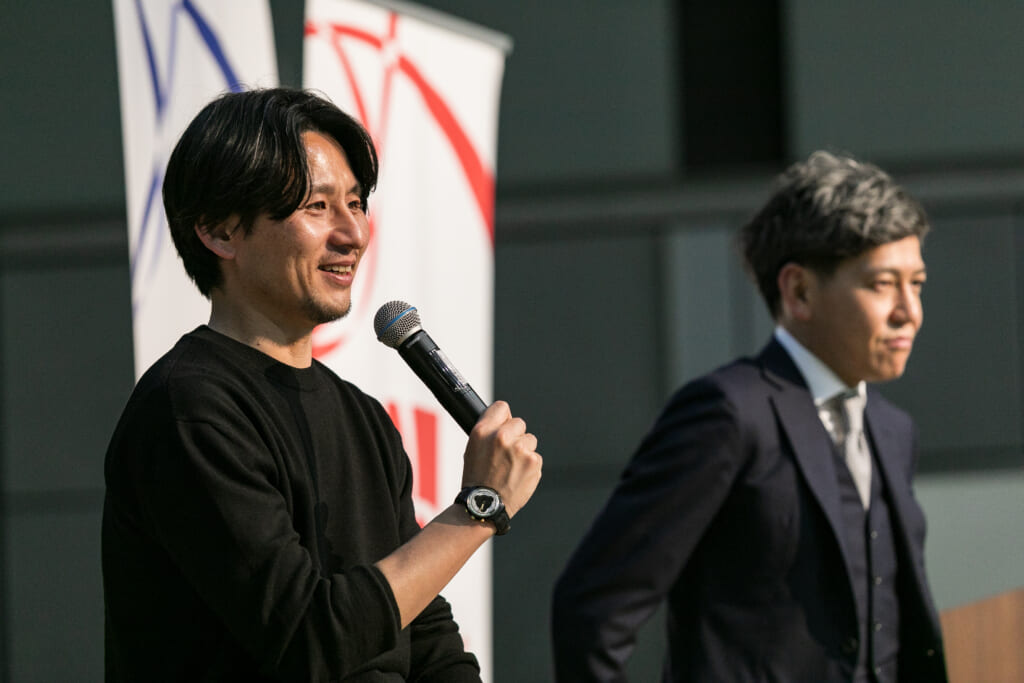
Mr. Kyouji Hase, Hase Tora Boseki Our company is headquartered in Hashima City, Gifu Prefecture, and has always focused on textiles since its establishment in 1887. As Mr. Maru shared with us, knowledge manufacturing is not a new concept. We, HASEGA Tora Boseki, have been able to survive for 137 years only because we have been a knowledge manufacturer in step with the times.
We feel that the founding story of Hase Torabo itself is the very embodiment of knowledge manufacturing. Our company was founded by Torakichi Hase, the first generation. I am the fifth generation. At that time, there was no major industry in Hashima City, Gifu Prefecture, and many people were engaged in sericulture as a dual occupation with agriculture. However, there was a problem that the cocoons they painstakingly produced were bought cheaply by middlemen from other areas. As a result, they could not make a living to support their families, and their children, except for the eldest son who would take over the family, had to go to work when they were in their teens.
The first generation was not an expert in textiles. However, he started up with the desire to see the community become as prosperous as possible. First, he founded a silk manufacturing company and built a silk mill. Then, they purchased cocoon balls from local people at a fair price and sold the raw silk. The construction of the factory created new jobs and allowed the sericultural farmers to stabilize their livelihoods, thus enriching the community.
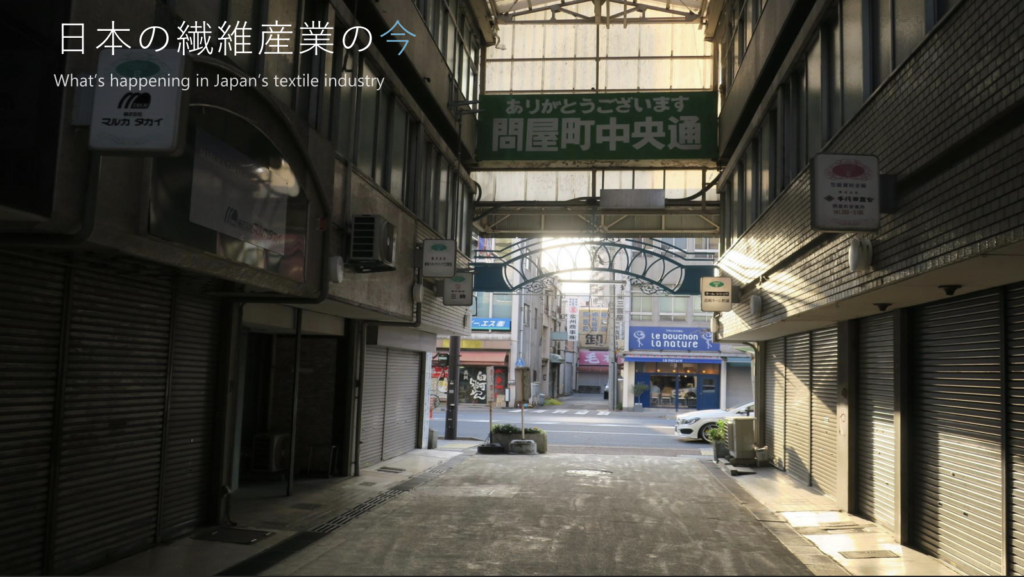
Let me return to the present day. The textile industry to which we belong is currently facing a very difficult situation. In Japan, the import rate of clothing is as high as 981 TP3T, and made-in-Japan clothes are very few and far between. The impact of this situation is clearly visible in the Gifu Textile Wholesale District, located near Gifu Station. In the past, Gifu Prefecture was home to many textile-related companies, and the wholesale district was very prosperous. However, as you can see, it has now turned into a shuttered street.
suffix for names of swords, armour, musical instruments, etc.Will the same thing happen to Hase Tora Spinning?
lengthening a valleyIf we do nothing as it is, it will certainly happen. That is why we need to incorporate new knowledge and engage in knowledge manufacturing. The key is which knowledge we combine with which knowledge we have. When I learned about the concept of knowledge manufacturing, I looked around the factory again to see what our strengths were. What I reaffirmed is that we are very good at turning materials into yarn. For example, Kynol, a product we developed, is extremely resistant to chemicals and heat, and has been used in rockets since 1994 as the "most flame-resistant fiber.
suffix for names of swords, armour, musical instruments, etc.That is great. What other examples do you have?
lengthening a valley For the past 10 years, we have been working with Spiber Corporation, a company that develops artificial protein materials of plant origin. They have successfully developed a structural protein material, Brewed Protein™, but lacked the knowledge to turn the material into yarn. Without the ability to produce yarn, it is impossible to manufacture fabric from it and ultimately commercialize it. Therefore, Hasegora Spinning provided the "technology to make yarn" that it had cultivated over the years, and by combining our mutual knowledge, we were able to pursue new possibilities.
suffix for names of swords, armour, musical instruments, etc. Would Spiber have been able to produce yarn if not for Hasegora Spinning?
lengthening a valleyIt might have. Or it would have taken a great deal of time to produce the thread.
suffix for names of swords, armour, musical instruments, etc. I am sure that many of you gathered here today are also people whose industries themselves are shrinking. Mr. Hase is expanding his business domain by practicing knowledge manufacturing, but there may be some companies that are not quite able to do the same. At the National Knowledge Manufacturing Conference, through the sessions and the exchange of knowledge with exhibiting companies, we hope that you will take home with you some tips for knowledge manufacturing.
KOBASHI HOLDINGS cultivating global issues
suffix for names of swords, armour, musical instruments, etc.Next, Mr. Shojiro Kobashi, President of Okayama-based KOBASHI HOLDINGS Corporation, please introduce yourself.
KOBASHI HOLDINGS Shojiro Kobashi Our company was founded in 1910 as an agricultural machinery manufacturer, and our origins lie in the manufacture of iron agricultural implements such as hoes and plows for plowing rice paddies and fields. I am the fourth generation in the company, and the first generation was originally a blacksmith craftsman. Our company was founded out of a desire to cultivate more and more farmland in Japan to increase food supply and to fill the stomachs of the Japanese people.
Since 2017, we have had a holding structure. Continuing the roots of the company's founding, Kobashi Kogyo is engaged in the agricultural machinery business. Tillage furrows" are attached to tractors that plow farmland. This tillage jaw is our main product, and it is filled with technology that has been developed since the company's founding. Currently, we boast the top share of the tillage jaw market in Japan, and we cultivate farmland throughout the country.
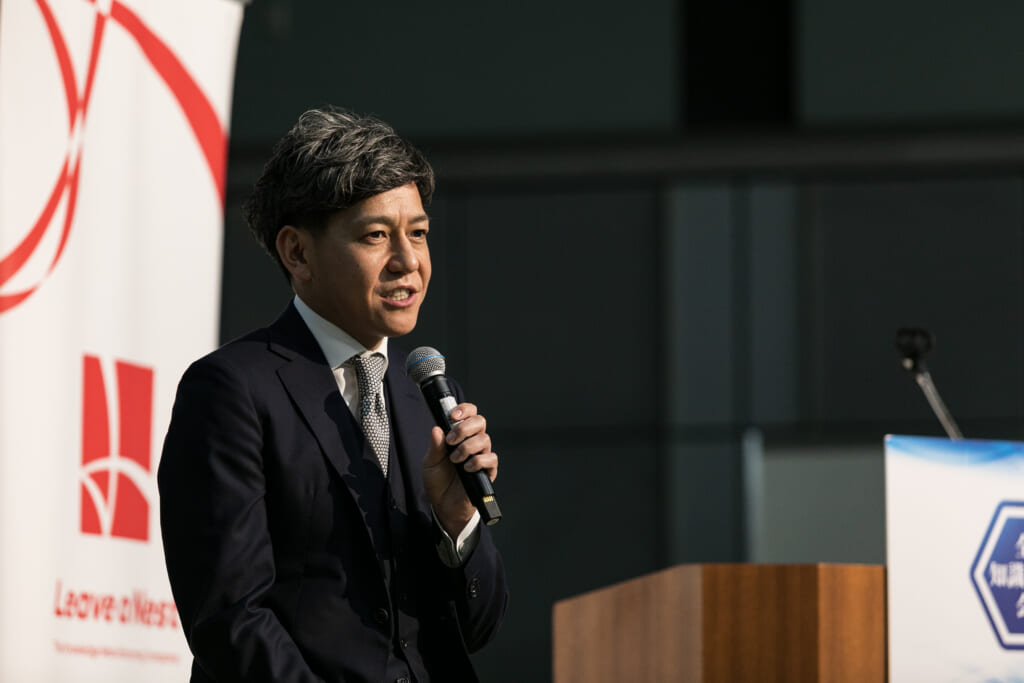
small bridgeSince I became president, I have redefined the company's philosophy to "Cultivate the Earth. It expresses our determination to take into account not only the farmlands of Japan but also the world, and to tackle issues that are occurring throughout the globe.
suffix for names of swords, armour, musical instruments, etc.You have recently entered the drone industry, Mr. Kobashi. Why did you decide to enter the drone business?
small bridgeThe first thing I wanted to do was to take the first step into a new industry that was about to emerge. Japan has been slow to introduce drones due to regulations, but the market is already growing rapidly overseas. We entered the drone business because we wanted to actively challenge other industries, rather than staying in the agricultural machinery industry, which is our main battleground.
SMEs and start-ups manufacture knowledge in both directions.
suffix for names of swords, armour, musical instruments, etc.While Mr. Kobashi is challenging new industries, Mr. Hase has been working on textiles for a long time.
lengthening a valley It is correct to say that we have not limited our business to textiles, but have continued to do so because we have always seen the potential in textiles.
For example, it was 61 years ago back in the day. A man came to us and said, "I would like to start a zokin (dustcloth) rental business, and I would like your help in developing a thread. In those days, tattered towels were sewn into zokin using a sewing machine. The idea of "zokin (dustcloth) rental" was so novel that the employee who responded to the request declined the offer.
However, despite the man's refusal, he still laid his hands in front of our silkworm cemetery on his way home. His grandfather, our representative at the time, who happened to be there, approached him and said, "I want to start a zokin rental business for the sake of happiness in the world. Although he was turned down this time, I was grateful that he listened to me". The grandfather did not have the slightest idea whether the zokin (dust cloth) rental business would be successful or not, but he was struck by the purity of his desire and decided to cooperate in the business. In fact, that man was Duskin's founder, Seiichi Suzuki, from whom Duskin's "Rental Cloth" was born.
suffix for names of swords, armour, musical instruments, etc. It is interesting to see a venture company with a strong passion for business like Duskin at that time, and a small business like Hasegora Spinning, which is dedicated to "for people," join forces, because the two companies' cooperation produced a hit product and Duskin grew to become a company that everyone knows.
KOBASHI also started joint research with Euglena in 2014, right? Although Euglena was already listed on the stock exchange, I think the potential of the "green beetle business" was still unknown. From which side did you invite them to join the joint research?
small bridge I proposed to Mr. Izumo, the representative of the company, "Why don't we do business together? In the background, there was a decline in Japan's food self-sufficiency rate, a corresponding decrease in the number of farmers, and an increase in abandoned and underutilized farmland.
We wanted to do something about this problem and came up with the idea that if farmers could produce fuel from algae on their farmland, the current situation could be improved. Then, I consulted with so many people to make it happen, but the only one who said, "Let's do it," was Mr. Izumo of Euglena. As it turned out, the idea at the time did not directly lead to business, but the experience of working with Mr. Izumo, who was full of venture spirit, was truly a great harvest for our company.
suffix for names of swords, armour, musical instruments, etc.HASETORA BOSHIN was started after receiving a proposal from a venture company. Conversely, KOBASHI began with a proposal from a venture company. The "beginnings" of both companies are very interesting. Of course, there is no correct answer as to which company should make the proposal, the venture company or the SME. It is important to "go manufacturing knowledge from both directions. I also feel that the more specific strengths and goals a company has, such as "yarn is our strength" or "we want to make biofuel from algae," the more successful the knowledge manufacturing business tends to be.
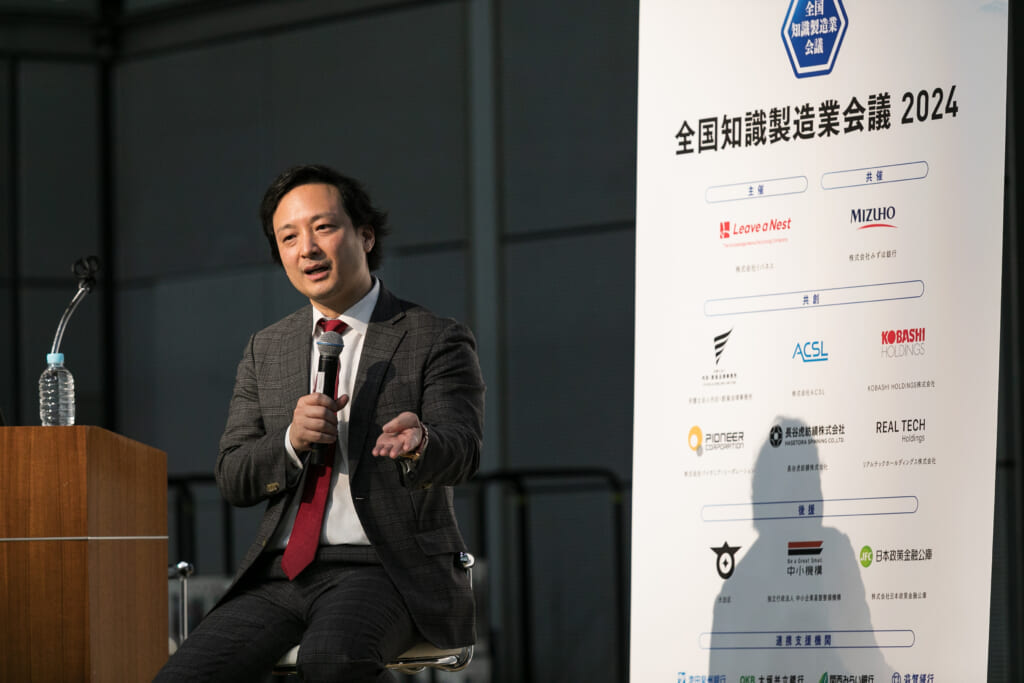
New knowledge is essential to set things in motion.
suffix for names of swords, armour, musical instruments, etc.I would like to ask you both for your opinion, is it possible for small businesses to collaborate with each other? Actually, I have an idea. One form of collaboration would be for SMEs to jointly establish a venture company. Or, it could be a way to jointly support venture companies that both companies would like to support.
lengthening a valleyThat is interesting!
suffix for names of swords, armour, musical instruments, etc.KOBASHI has already invested in several venture companies. Is it realistic to actually collaborate with SMEs to support these ventures?
small bridgeBefore answering your question, let me explain a little about our investment stance. It is impossible for us to complete something new on our own. In other words, we need to multiply new knowledge from the outside. Collaboration with venture companies is extremely effective from this perspective. Therefore, in the same sense, I think it is also effective to collaborate with small and medium-sized enterprises that have different knowledge from ours, and I think it would be very interesting to work together to support ventures.
suffix for names of swords, armour, musical instruments, etc.Thank you very much. I would like to change the subject a little, but KOBASHI became a holding company in 2017 and established KOBASHI ROBOTICS in 2020.
small bridgeKOBASHI ROBOTICS provides comprehensive manufacturing support by providing venture companies with the manufacturing knowledge and experience we have accumulated over the past 100 years.
suffix for names of swords, armour, musical instruments, etc.In other words, it's the know-how part. Although the product itself belongs to the venture company, KOBASHI ROBOTICS provides knowledge on effective manufacturing methods and mass production systems. Moreover, I hear that sales are already strong and the venture companies we have supported are growing significantly. What I am trying to say is that this is knowledge manufacturing in the KOBASHI style.
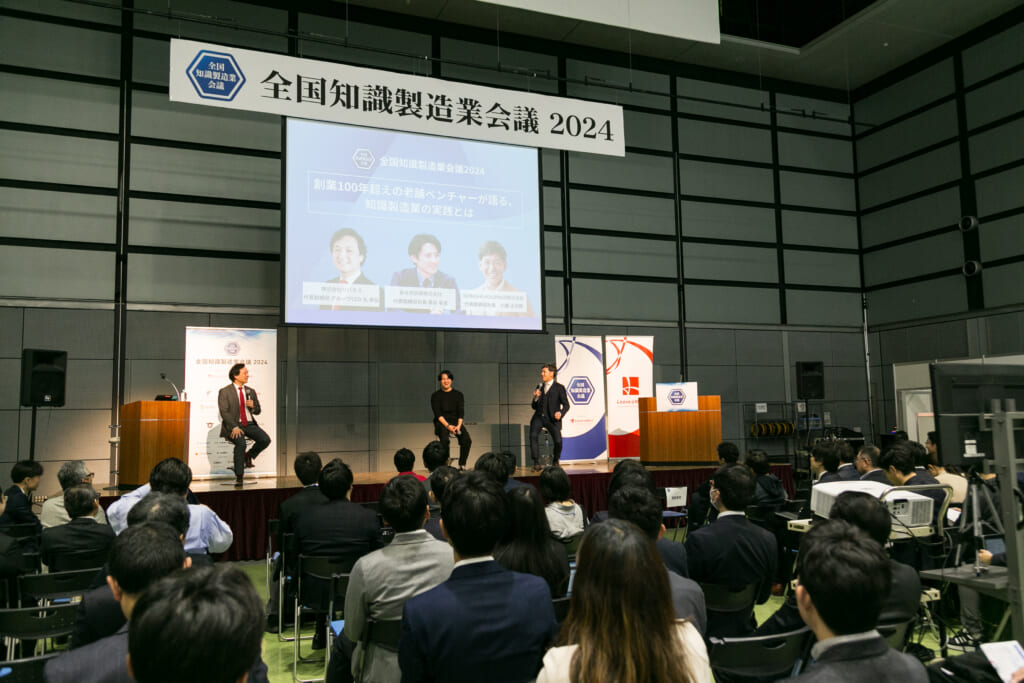
With our vision of "Advancing Science and Technology and Contributing to the Earth," RIVERNESS is working every day in knowledge manufacturing to solve problems around the world. However, what we can do alone is limited. Therefore, I strongly hope to create a situation where small and medium-sized enterprises across the country develop knowledge manufacturing in various fields, as KOBASHI is doing in the manufacturing field and HASETORA Spinning is practicing in the textile field.
Creating the Future by Practicing Knowledge Manufacturing
suffix for names of swords, armour, musical instruments, etc.The end of the session was quickly approaching. I would like to close with a few words from each of them.
small bridgeAs a company that has been involved in the agricultural sector for over 100 years, we will continue to contribute to increasing the income and status of Japanese farmers. At the same time, we would like to increase the presence of manufacturing companies like ours, and we hope to realize such a world as soon as possible by working on knowledge manufacturing in the KOBASHI way.
lengthening a valley If nothing is done, five or ten years from now, shuttered streets like those in the Gifu textile wholesale district will be the norm in Japan. I am convinced that the key to preventing such a future lies with small and medium-sized enterprises. I would like to take the initiative in creating a situation where Japanese SMEs cooperate with each other to solve global problems.
suffix for names of swords, armour, musical instruments, etc.Thank you. I think there were three main points to this session: first, small and medium-sized companies should actively communicate with venture companies. First, SMEs need to be proactive in communicating with venture firms, not with the attitude of, "Are rags and green beetles profitable? The second is for SMEs to make proposals to venture companies. Do not wait and see what they have to say. The third and final point is investment. Compared to large corporations, small and medium-sized enterprises have less complicated flows and should be able to make decisions with a sense of speed. Please invest for the future world. Let's change the world together, all of us here today at this National Knowledge Manufacturing Conference. Thank you very much for your time today!
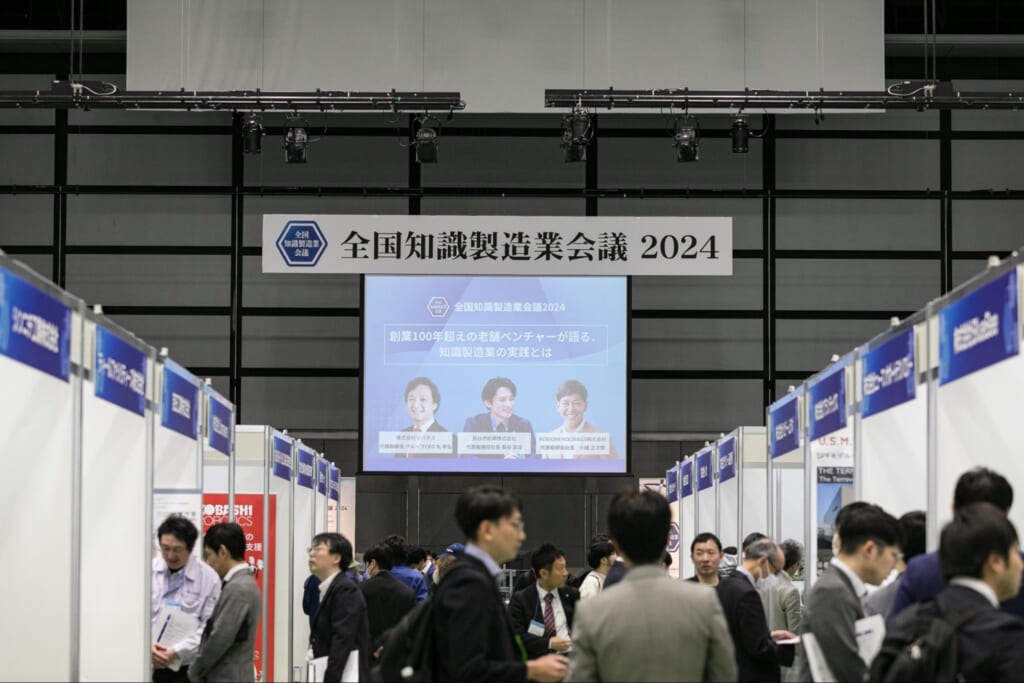
![National Knowledge Manufacturing Conference 2024] Panel Session: "A well-established venture company in business for over 100 years talks about the practice of knowledge manufacturing" will be held.](https://km.lne.st/wp-content/uploads/sites/81/2024/04/21ec1d452015c8b4a70be37051b09d44.png)
![KOBASHI Group] Evolution of Local Small and Medium-Sized Enterprises Caused by the Shift to Knowledge Manufacturing / Creating Businesses Like Startups While Being a 100-Year-Old Company (President x Next Generation Dialogue)](https://km.lne.st/wp-content/uploads/sites/81/2024/03/kobashi_tatsuzaki_top-1024x683.jpg)
![KOBASHI Group] The Evolution of Local Small and Medium-Sized Enterprises through the Shift to Knowledge Manufacturing / A Fusion of Philosophy, Speed, History, and Innovation. The "way of seeing things" has completely changed.](https://km.lne.st/wp-content/uploads/sites/81/2024/03/774dec9ff8af459f103a03f6208f1c03-1024x683.jpg)