- Speech/Session Reports
Lighting the Way for the Future of People and the Planet Through the Power of Engineering—The “Knowledge-Based Manufacturing” Initiative by a Long-Established Venture Celebrating Its 120th Anniversary—[National Knowledge-Based Manufacturing Conference 2026: Digest]
2026.07.31
On March 27, 2026, Ribanes Co., Ltd. held the “National Knowledge Manufacturing Conference 2026” as a forum where medium-sized and small businesses and startups could combine their knowledge to create new knowledge and help solve global challenges.
In the keynote speech titled “Illuminating the Future of People and the Planet Through the Power of Engineering: The ‘Knowledge-Based Manufacturing’ Initiative by a Long-Established Venture Celebrating Its 120th Anniversary,” Toyohisa Yamada, President and CEO of Yamada Shokai Holdings Co., Ltd.—a long-established company that has supported regional infrastructure while taking on the challenge of co-creation with deep-tech ventures—took the stage. He delivered a passionate speech detailing the current status of their efforts to solve social issues by combining the company’s accumulated knowledge with that of startups, all centered on engineering, as well as the vision behind this initiative. This article provides a summary of that speech.
A company founded 120 years ago, whose history began alongside the lights of Nagoya
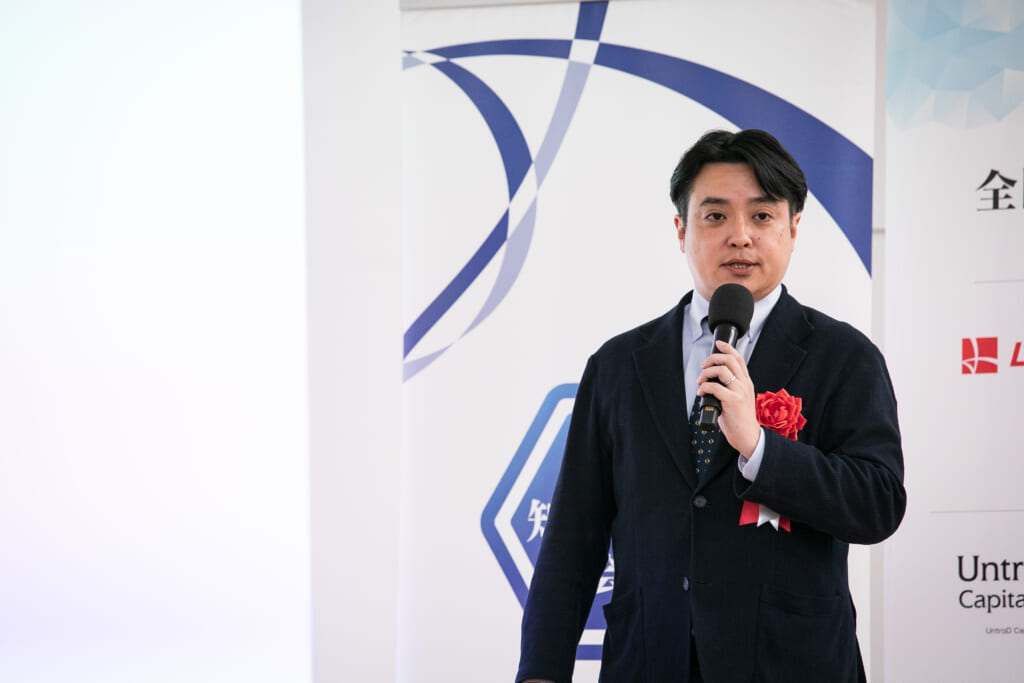
Toyohisa Yamada, President and CEO, Yamada Shokai Holdings Co., Ltd.
Born in October 1979. Graduated from the Department of Chemical Systems Engineering, Graduate School of Engineering, The University of Tokyo. He holds a master's degree in engineering. He has been interested in energy issues since he was a child and studied fuel cells and combustion as a student, and joined Yamada Shokai Co. He aims to improve resilience in the four areas of energy, infrastructure, agriculture, forestry, and fisheries, and housing and environment through the power of engineering.
In a nutshell, our company specializes in gas and water utility installation work. Yamada Shokai was founded in 1906, making this our 120th year in business. In Nagoya, Nagoya Gas—the predecessor of Toho Gas—was established in 1906. At that time, our founder was approached to take on the installation work. In other words, our company was born alongside the very first project that brought gas lighting to Nagoya. I am the fifth-generation successor. I was born into a family that ran this business, and from a young age, I was raised to believe I would one day take over the company. Personally, I decided around elementary school that I would dedicate my life to this business, so I studied related fields and returned to the company.
Currently, our work covers virtually all infrastructure projects essential to daily life—from installing gas pipelines buried beneath roads and gas piping inside buildings to related projects involving water, electricity, and telecommunications. In this context, our goal is to “ignite resilience for people and the planet.” We imbue the word “light” with the meaning of ensuring safety by lighting a lamp in the face of danger, as well as illuminating the path ahead. Moving forward, we intend to carry out work that “lights up” the resilience of people and the Earth for the future.
A company that builds and maintains its own infrastructure
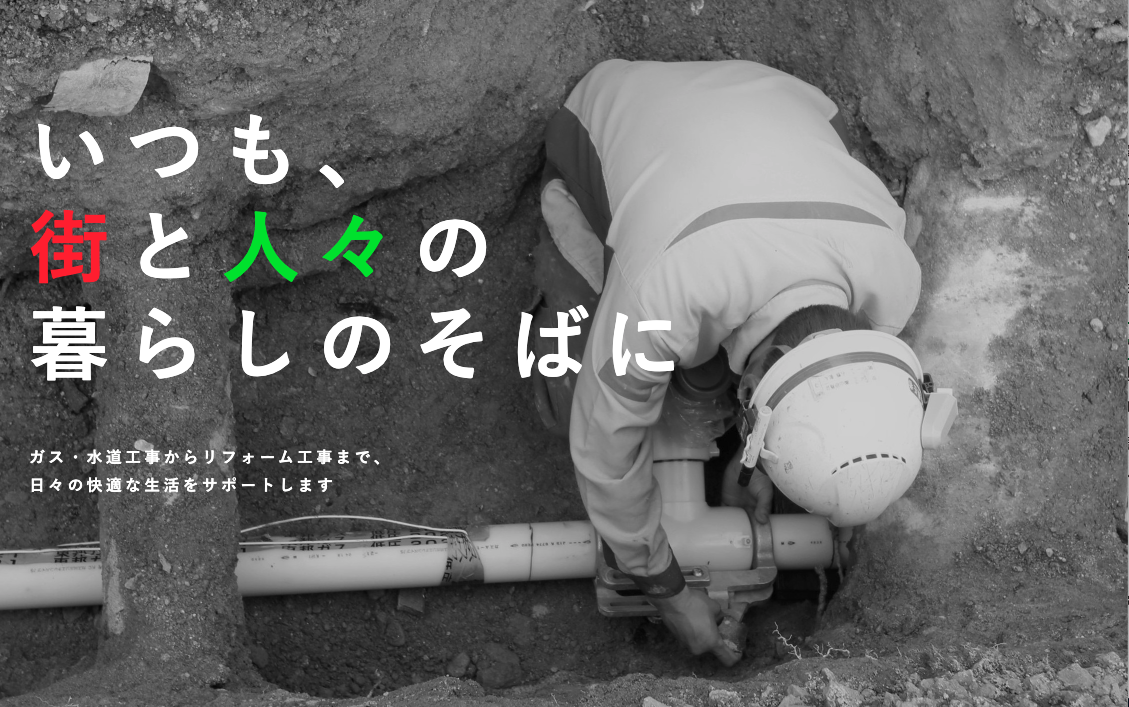
In this day and age, many companies outsource their plumbing and electrical work, but we’ve taken the opposite approach and have continued to employ our own staff. During slow periods, fixed costs are a heavy burden, and to be honest, it’s very difficult. Even so, we’ve gritted our teeth and kept our staff on, which has allowed us to hone our skills and maintain a structure that enables us to take on new challenges. With a staff of about 250, we operate at 200 job sites every day across the three prefectures of the Tokai region. Having supported this infrastructure in this way, we also rush to the scene to assist with recovery efforts when disasters strike. From the Ise Bay Typhoon to the Great Hanshin-Awaji Earthquake, the Great East Japan Earthquake, and the recent torrential rain disasters—we’ve traveled to areas where gas service was cut off to assist with restoration efforts. Furthermore, through our work on residential environments—including hot water supply, heating, and insulation—we play a role in safeguarding people’s health.
As I’ve continued in this line of work, I’ve come to feel a strong sense of urgency about certain challenges. First and foremost is the labor shortage. Since our work relies on hands-on labor in the field, I’m concerned about whether we’ll be able to continue at the same pace in the future. Furthermore, issues such as carbon neutrality and the natural environment are becoming increasingly serious. This is true not only in our region but also in Southeast Asia, where we’re beginning to focus our attention. I truly feel that the resilience of the entire planet is being shaken.
However, even though we could see the challenges, we lacked the know-how to incorporate new technologies into our business. Even when we met companies with promising technologies at pitch events and the like, we didn’t know how to turn them into a business.
Shifting Toward a “Knowledge-Based Manufacturing Industry” Through Collaboration with Startups
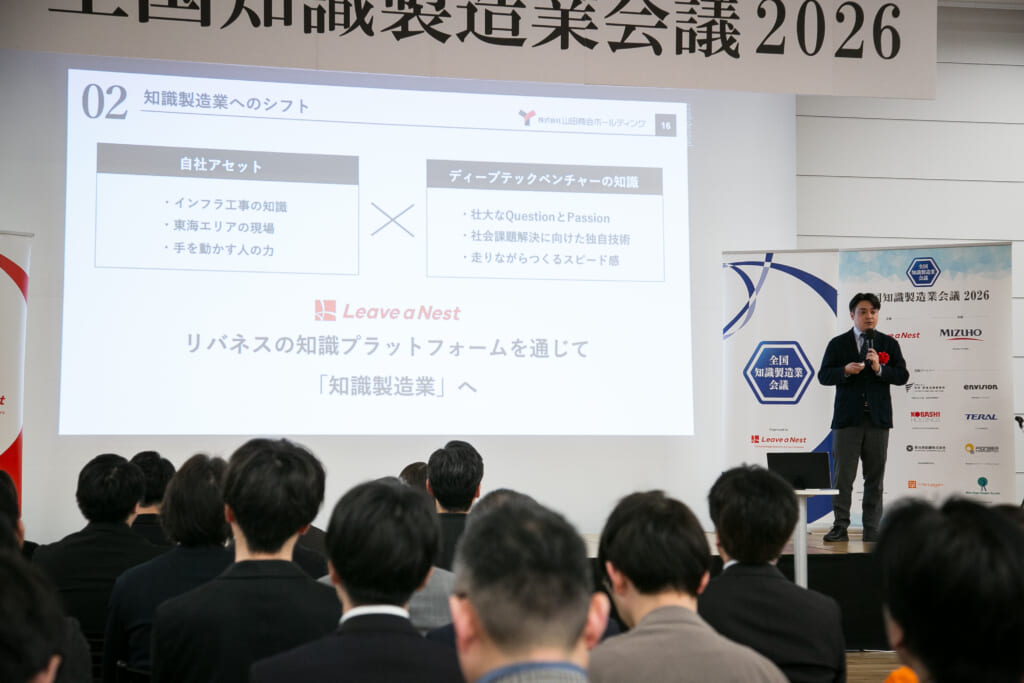
That’s when I came across Lifeness and the concept of “knowledge manufacturing.” Lifeness has deep ties with R&D-driven startups both in Japan and abroad, and I felt they were the kind of people who were working hard on the ground in the community. I decided to work with Lifeness and technology-driven startups to build new businesses, and we’ve been collaborating for about two and a half years now.
We have many years of experience, a strong local presence, and a workforce willing to roll up their sleeves. On the other hand, startups possess unique technologies, passion, and speed. By combining these elements, we will create new knowledge. In other words, we are striving to transform ourselves into a knowledge-based industry.
As part of these efforts, several specific examples have emerged.
First, in the energy sector, we are collaborating with Helical Fusion Co., Ltd. At the experimental facility currently under construction in Toki City, Gifu Prefecture, extremely high-strength welding is required in an extreme environment where high and low temperatures coexist in close proximity. We possess welding technology that we have developed to prevent leaks of fine molecules, such as those found in city gas. We believe this technology can be applied to this new energy project as well.
Next, we are collaborating with Naturanix Co., Ltd. in the field of electric motorcycles equipped with storage batteries. Technology that allows for charging in just three minutes is currently being demonstrated in Thailand, but for such technology to be implemented in society, personnel to handle the installation and maintenance of the equipment are essential. As the very entity responsible for these on-site operations, we considered how we could contribute and signed a memorandum of understanding (MOU).
In the infrastructure sector, we are also collaborating with drone companies. The small drones manufactured by Liberaware Co., Ltd. are used to inspect dangerous, dark, and confined spaces that are difficult for people to access. However, this technology cannot be widely adopted without personnel who can operate it on-site, repair it when it breaks, and manage the data. As a company with close ties to the field, we believe we are well-positioned to take on this operational role.
In addition, there are technologies—such as those developed by Terra Lab Co., Ltd.—that use long-range drones to assess disaster situations. However, disasters do not occur frequently. That is precisely why we are working together to develop a framework for routine use and to design operational procedures that will be effective in the event of an emergency. We are collaborating on this from that perspective.
In the agriculture, forestry, and fisheries sector, we installed ARK Co., Ltd.’s land-based aquaculture system on our own property and conducted shrimp farming. By actually using the system, we were able to identify specific challenges, such as “this part should be improved” or “it would be better to operate it this way.” We are contributing to the improvement of the technology by providing feedback from this user perspective.
Small and medium-sized enterprises will also play a role in serving as a bridge to Southeast Asia.
We are also focusing our efforts on expanding overseas. To understand how the projects we’re building with startups will contribute to solving social issues in Southeast Asia, I’ve been traveling abroad myself to see the challenges on the ground firsthand. From January through March of this year, I visited Ho Chi Minh City and Hanoi in Vietnam, as well as Manila in the Philippines. Through our Vietnamese subsidiary, which we established in 2020, we’ve been building various connections, and I’m now applying the professional experience I’ve gained in Japan to our operations in Vietnam.
We’ve come to realize that there are many companies with technical expertise right here in the region. When such Southeast Asian companies consider expanding into Japan, I believe we can respond quickly and effectively in each region—for example, our company in Nagoya, KOBASHI HOLDINGS in Okayama, Hase Tora Spinning in Gifu, and Noshiro Densetsu in Akita. Furthermore, if such alliances of medium-sized and small businesses were to expand, we might be able to assist even when other companies come to Japan or expand into other parts of Asia. That’s what I’ve been thinking about.
It is precisely because large corporations are working so hard that small and medium-sized enterprises like ours exist. At the same time, I believe there are things that only small and medium-sized enterprises can do and areas where we excel. That is why I would like to work with you. I also hope that, through this kind of cooperation, we can build a bridge to Southeast Asia.
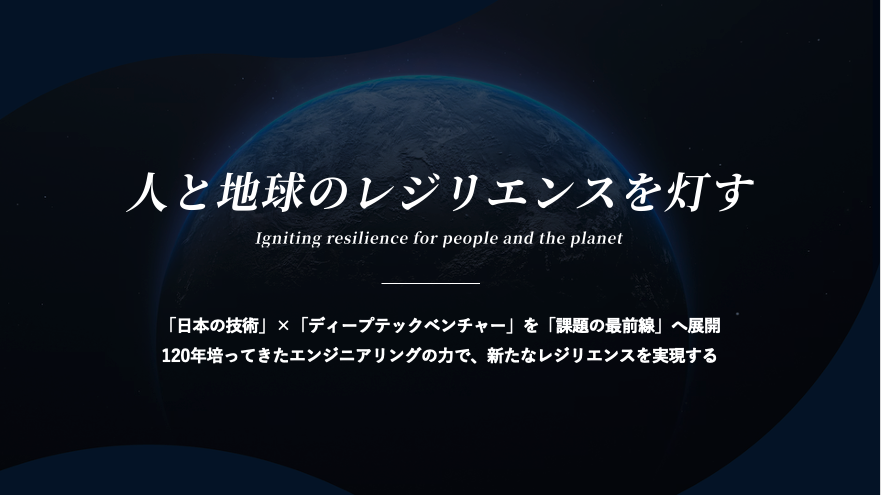
Finally, we are placing the phrase “Igniting Resilience for People and the Planet” at the center of our future work.
The expertise we have cultivated over many years carries significant weight. Through this expertise, we aim to help build new forms of resilience—both in this region and in various parts of the world. Let’s work together to make this a reality.